
Our Easy 5 Step Approach to Planting Shrubs & Trees In The Fall In Zone 3 – A Complete Guide

For the last 10 years, my husband and I have planted trees & shrubs in the Fall on our little 4-acre homestead here in Manitoba, Canada. We’ve found that trees we plant in that sweet spot of Fall — when it’s not yet too cold but also not too warm — do the best and put on tons of new growth that next growing season. So I figured it’s about time we share all our tips and tricks, with help from our sponsor, Shelmerdine Garden Centre. So here’s our easy 5 step approach to planting shrubs and trees in the Fall in Zone 3. Consider this your complete guide!
A word on our sponsor, Shelmerdine Garden Centre
We’re thrilled to be collaborating with Shelmerdine again on this content.
Shelmerdine Garden Centre supported our garden redesign this season (full blog and pictures here). They have been a huge resource to us and we highly recommend them to other Manitoban gardeners.
Shelmerdine Garden Center Ltd. is a destination for those who love to celebrate fashion, plants and beautiful spaces.
Whether you’re looking to transform your outdoor space, explore unique locally grown plants, or find thoughtfully curated products, their team is here to help bring your ideas to life.
This blog covers:
- The Benefits of Planting Trees in the Fall In Zone 3 Manitoba
- How To Select The Right Trees For Zone 3
- The Exact Perfect Time To Plant Trees In The Fall In Manitoba
- Our 5 Step Approach To Planting Trees & Shrubs In Zone 3
- How To Choose The Right Planting Site For Trees & Shrubs
- How To Properly Prepare Your Soil For Tree Planting Success
- How Big Of A Hole Should You Dig For Planting Trees And Shrubs
- How The “Tight Tuck” Planting Method Protects Roots From Frost
- How Much and How Often Should You Water Trees & Shrubs In The Fall
- How To Protect Your Trees From Winter Weather
- How To Maximize Tree Growth In A Short Growing Season
The Benefits of Planting Trees & Shrubs in the Fall In Zone 3 Manitoba

While some gardeners may argue that planting trees and shrubs in the Spring has its benefits, we’ve found that Fall is the best time to plant trees in Manitoba Zone 3.
Here’s 3 reasons why you should wait til Fall to plant trees and shrubs if you live in Manitoba:
1. Fall planting gives trees a chance to become established and properly set their roots before Winter arrives.
2. There’s increased moisture in the soil in the Fall as well as the presence of beneficial fungi and bacteria, which provides great nutrients for newly planted trees.
3. Winter snow provides moisture and insulation for the roots so no need to worry about excessive watering and/or tree roots getting too dry as there is when planting in the Spring/Summer.
But the biggest benefit we’ve found to planting trees in the Fall on our Zone 3 homestead is the consistently cool temperatures at this time of year.
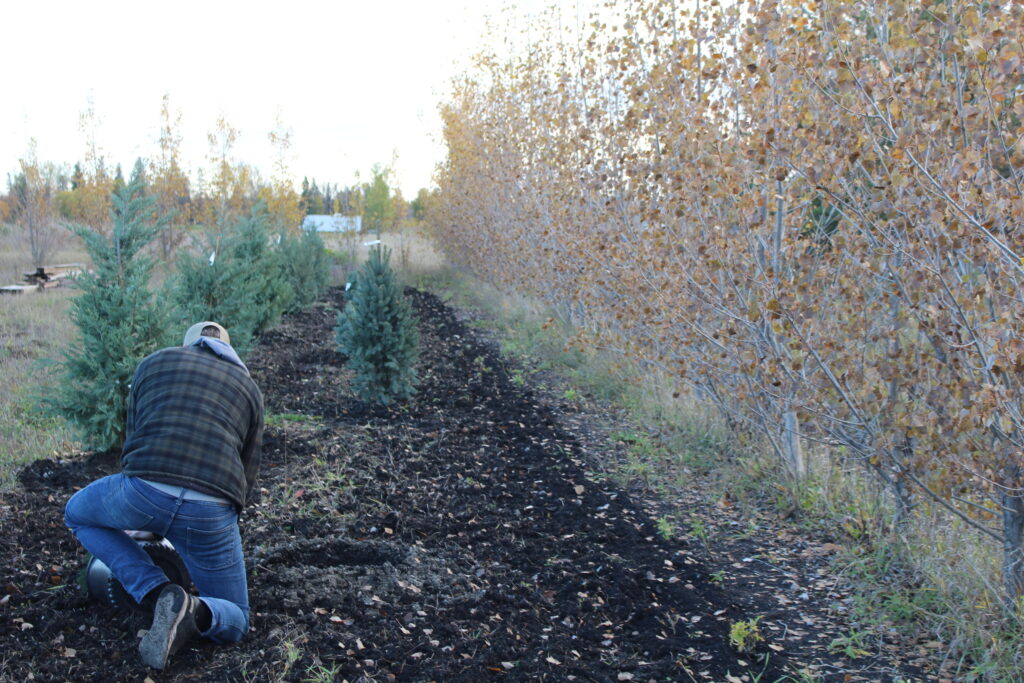
Without the Summer heat, trees planted in the Fall aren’t under any additional stress during the establishment process.
This allows them to allocate their energy towards root development and growth rather than just “surviving” the Spring/Summer heat.
Plus….
Your local garden centre, including Shelmerdine, often has amazing sales on trees and shrubs at the end of the season.
So not only will you save a little money. Your trees will also have a much higher chance of survival.
How To Select The Right Trees & Shrubs For Zone 3
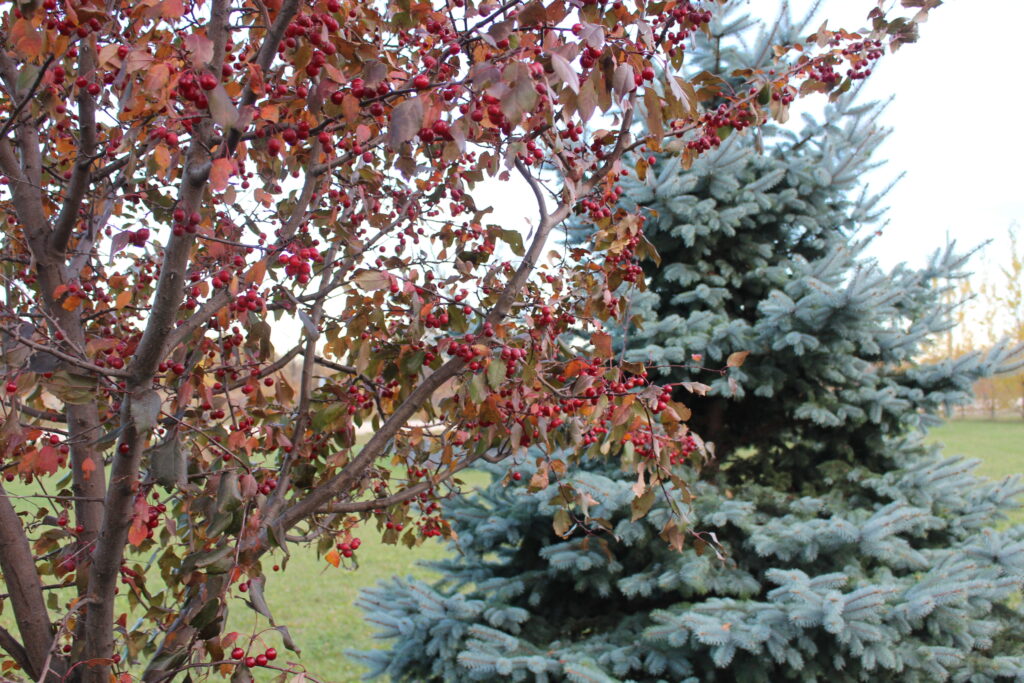
When it comes to selecting the right trees for your grow zone, I’d suggest first starting with a landscaping plan.
Here’s an example of the plan we had made for our property.
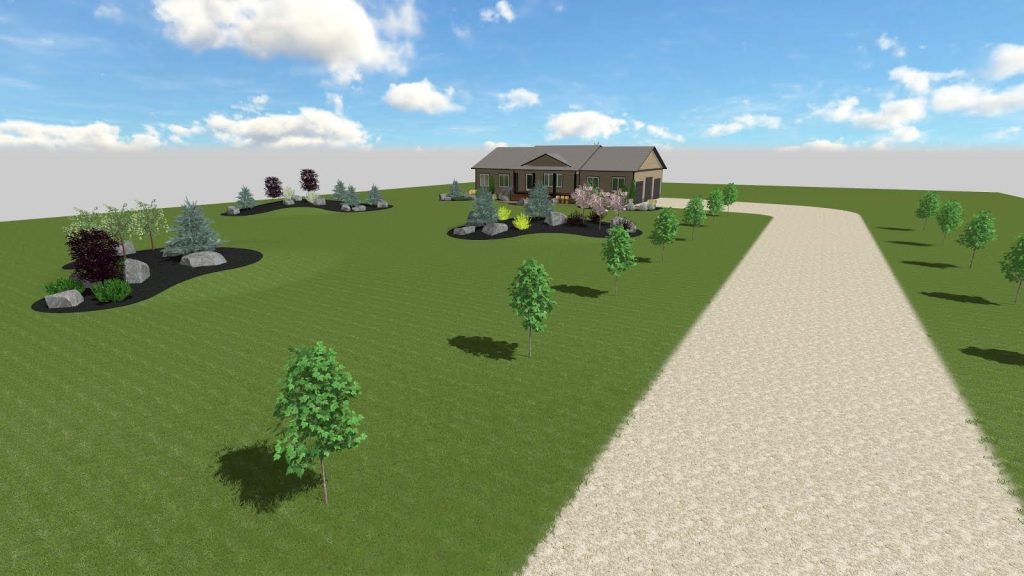
Our landscape plan has helped us plan for the long-term.
We can visually see the trees we hope to plant in future years as well. And it also helps ensure we’re not regretting tree placement or having to re-do our work.
Whether you’re planting trees and shrubs on a bare piece of land or landscaping an established space, I highly suggest starting with a landscape plan!
What Tree Varieties Are Best For Zone 3
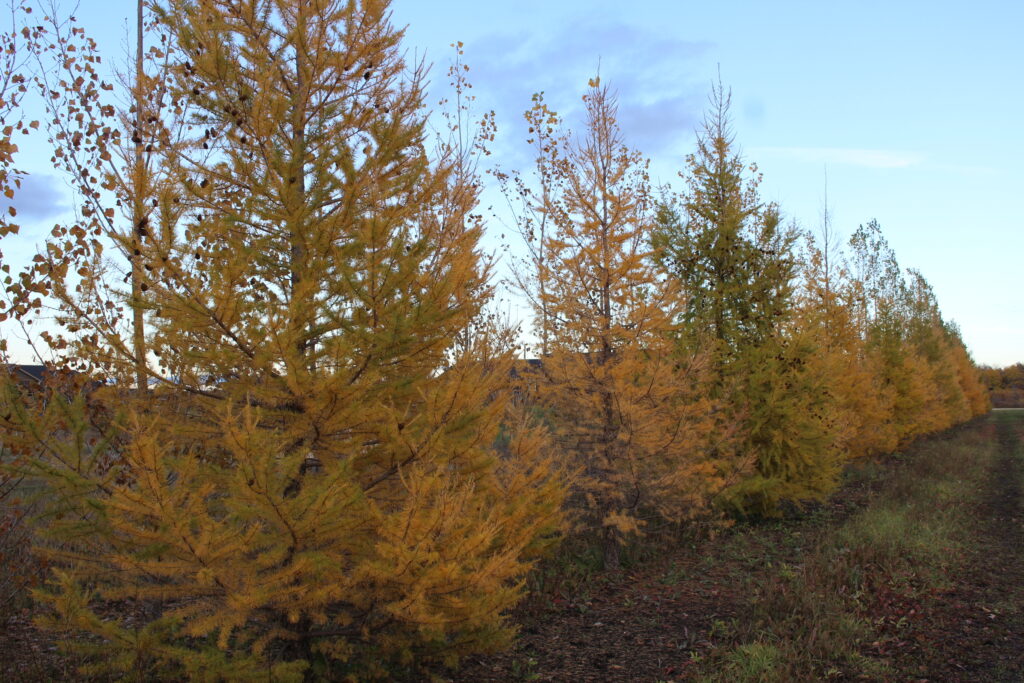
Now, once you’ve got your plan in place, you can start thinking about what tree varieties are right for Manitoba’s unique growing conditions
While there are thousands of amazing trees for northern climates, here are two key characteristics to look for:
- Cold Hardy — Choose trees that have been proven to succeed in a grow zone a bit colder than the one you live in. For example, we usually choose trees that are hardy for Zone 2. This way they do exceptionally well on our Zone3b property.
- Hybrid Variety — Hybrid tree varieties that have been specifically bred for short growing seasons thrive here. They can put on more growth in a shorter period of time do great in Zone 3.
More on selecting tree varieties and The Best Tree Varieties For A Zone 3 Garden here in this blog!
Lastly, it can be so beneficial to talk to your local experts.
Think arborists and/or tree nursery and garden centre staff. These are people who are familiar with the trees that thrive in your area.
They can provide valuable insights and recommendations based on their knowledge and experience.
We found it really helpful to chat with the team at Shelmerdine when looking for some new trees to add to the shelter belt around our property.
When’s The Best Time To Plant Trees & Shrubs In Manitoba?
This may be controversial….but here’s what we’ve found is the exact perfect time to plant trees and shrubs in the Fall in Manitoba. Specifically here in our Zone 3 climate!
The best time to plant trees in Zone 3 is typically the last two weeks of October and leading into the first week of November.
At this time, the ground is not yet frozen but we’ve already had several light frosts.
The daytime temperatures typically aren’t getting higher than 10-15°C and nighttimes are consistently dropping to freezing or just above.
This little pocket of time ensures that trees won’t start putting on new leaf growth but can instead focus on establishing their roots before the actual hard freeze hits.
So there you have it — the best time to plant trees in Manitoba in the Fall is last two weeks of October and leading into the first week of November.
Comment below if you’ve found a different time that works well for Fall tree planting, I’d love to hear!
4 (More) Reasons Why Fall Is The Perfect Time For Tree & Shrub Planting In Zone 3
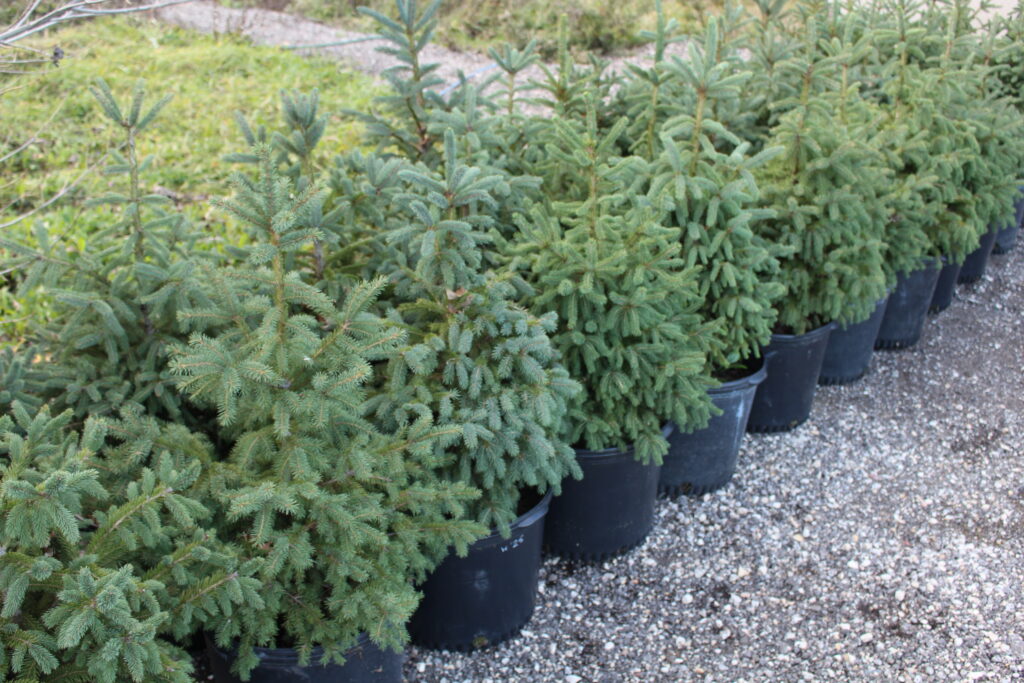
- Fewer pests so the chances of your trees and shrubs contracting disease is lower
- No weed pressure for your plants to compete for nutrients with
- Warm (but not hot) soil = perfect for root establishment
- Consistent moisture with snow & rain means you don’t have to worry about watering again until the Spring
How Late Can You Plant Trees & Shrubs in Zone 3 Manitoba?
I love this question!
Because sometimes life gets busy and you miss the window when it’s considered “ideal” to plant trees.
However, we’ve found that as long as the ground is “workable” you can have success planting trees.
Let’s break that down.
Workable ground = soil that is easy to dig into without requiring excessive force.
The exact time of this will vary depending on where exactly you live in Manitoba and the micro-climate in your own yard.
Plus what type of Fall we’re having!
But don’t forget — the temperature of the soil will be much warmer than the air temperature.
So even if it snow has fallen, you can likely still plant trees and shrubs in Zone 3 Manitoba late into Fall!
I’ve also seen local arborists suggest planting trees and shrubs 4-6 weeks before the ground freezes.
Our Easy 5 Step Approach to Planting Shrubs & Trees In The Fall In Zone 3
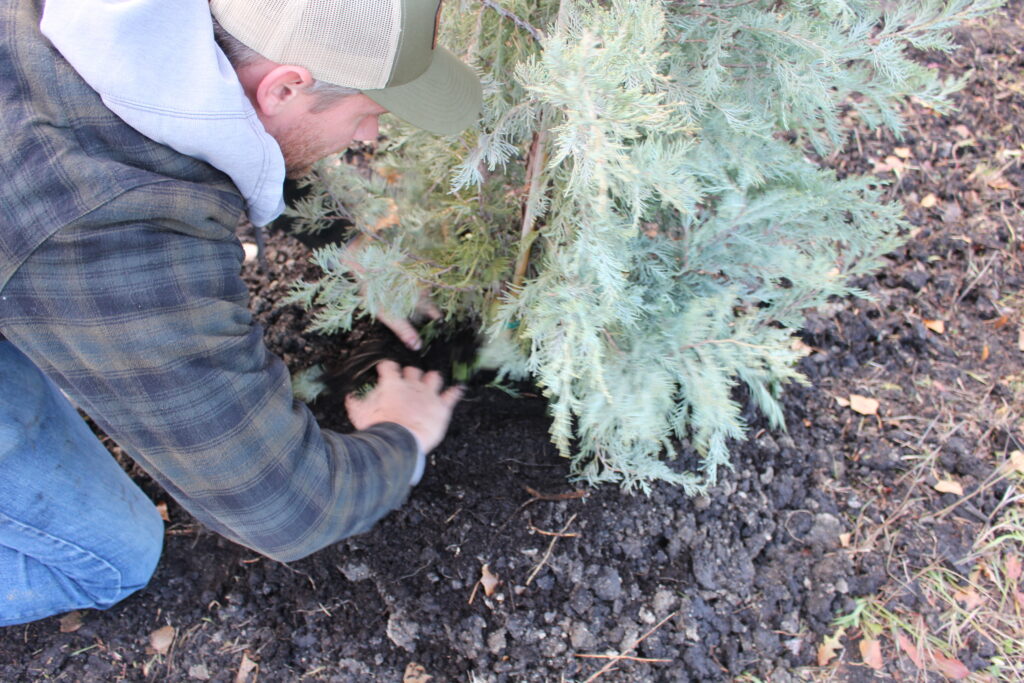
Here’s an overview of our 5 step approach to planting shrubs and trees.
- Choose the right planting site
- Prepare your soil
- Dig a hole double the size of your root ball
- Do our “tight tuck” planting method
- Water until the ground is frozen
Keep reading for detailed information on each step!
How To Choose The Right Planting Site For Trees & Shrubs
The exact location you choose to plant your tree or shrub will depend on two things.
- The variety
- What you’re trying to accomplish
For example, if your goal is to landscape your front yard you will have a very specific location in mind for your tree or shrub. And therefore should select the appropriate plant for that site (ie: hours of daily sunlight).
However, if your goal is to create a shelter belt or privacy wall around your property, you’ll likely be planting several of a specific variety.
So start by understanding your goals before choosing your planting site.
Now to get a little more specific, there’s three key things you need to look for when choosing a planting site for trees and shrubs.
- Well-draining soil. You don’t want standing water which can rot your tree roots. Further, you don’t want a really uneven surface area where water will run off and not reach the roots of your trees and shrubs.
- The right amount of sunlight for your tree or shrub. Carefully follow the care instructions for your exact tree or shrub variety. They will specify whether your plant requires full sun, partial sun or shade.
- Enough space for mature growth. This one might be the most important! I so often see gardeners getting excited and planting small trees too close together. This can stunt the growth of your trees. It can also lead trees to growing in strange ways. So learn how large your tree or shrub will get at full maturity and then provide a little extra space on top of that too.
How To Properly Prepare Your Soil For Tree Planting Success
Time to get planting!
One of the great things about planting trees in the Fall is that the soil is easily workable, so you don’t have to work too hard to dig your holes.
Now, there’s two ways to prepare your soil depending on the size of tree you’re planting.
How To Prepare Soil When Planting Tree Whips/Seedlings:
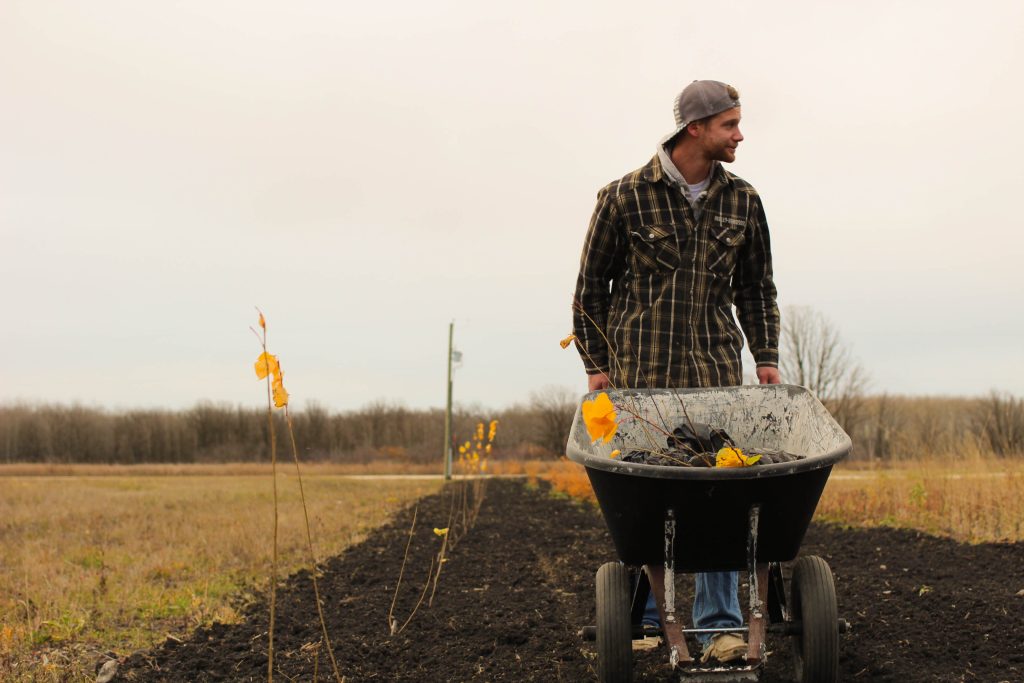
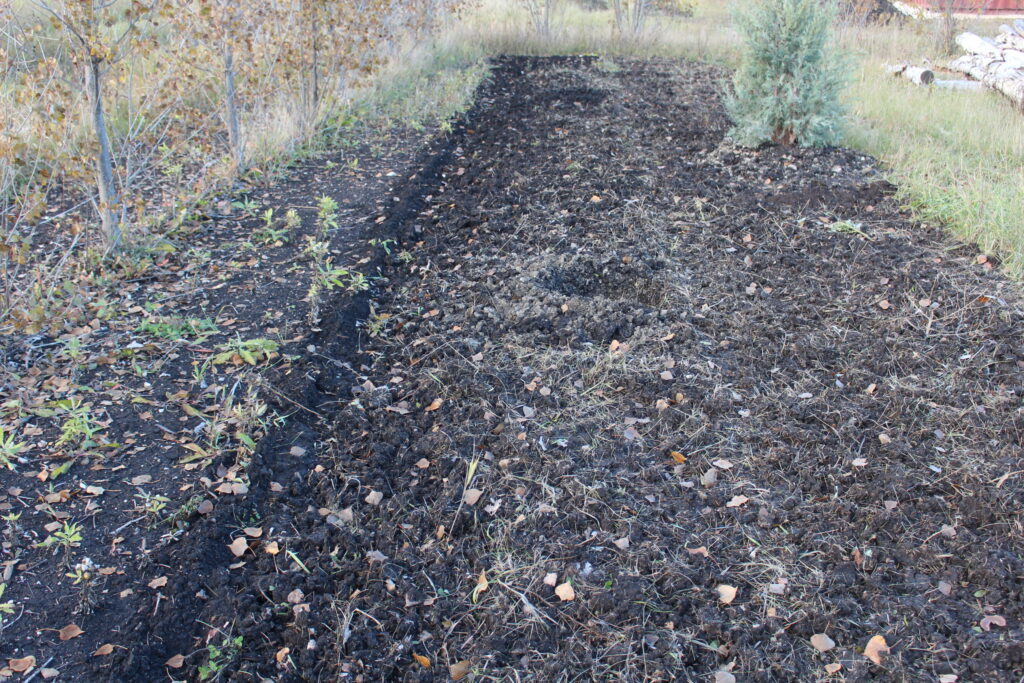
If planting tree seedlings or whips (a slender, unbranched shoot or plant), you’ll want to plant into tilled soil that is light and fluffy.
You can easily plant these small trees by hand as pictured above.
In this photo, my husband and I filled our wheelbarrow with hundreds of Poplar whips and planted them by hand by simply planting each whip a few inches into the soil.
We just used a sharp, metal shovel to dig and fill our holes. Easy as that!
We do not add any additional compost or fertilizer to the soil and this is key!
You don’t want your trees to start putting on new leaf growth in the Fall only for it to fall off with the first freeze. Instead, you want the trees to focus their energy on establishing strong roots.
So planting into your native soil that has been well-tilled works perfectly fine.
How To Prepare Soil When Planting Established Trees:
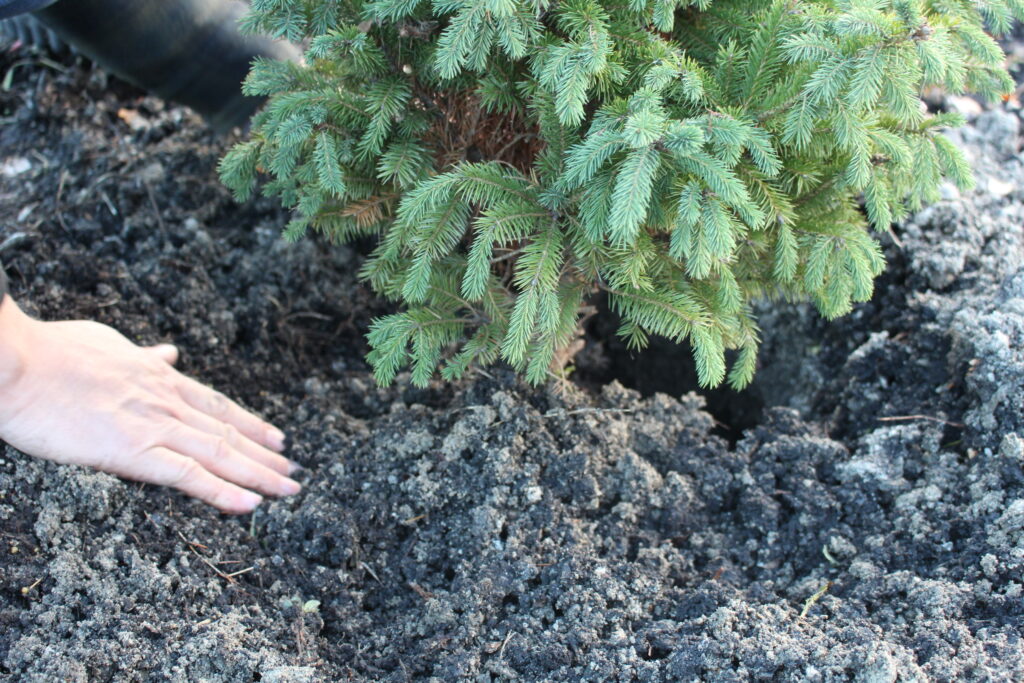
On the other hand, we’ve taken a far different approach when planting well established and mature trees from a nursery or garden centre.
These are typically trees that are in 20 gallon containers or larger and are 2-3 feet or larger.
If we are planting a row of trees for a shelter belt, we will till the soil so it’s easy to work.
But if planting a single tree for landscaping/ornamental purposes, we will dig a hole directly into the native soil.
In both instances, there’s nothing fancy that needs to be done to your soil. Till if needed. And that’s it!
With that being said, it’s important to remove the grass from around your tree planting site. Grass can easily choke out trees.
How To Prepare Your Soil For Planting Shrubs
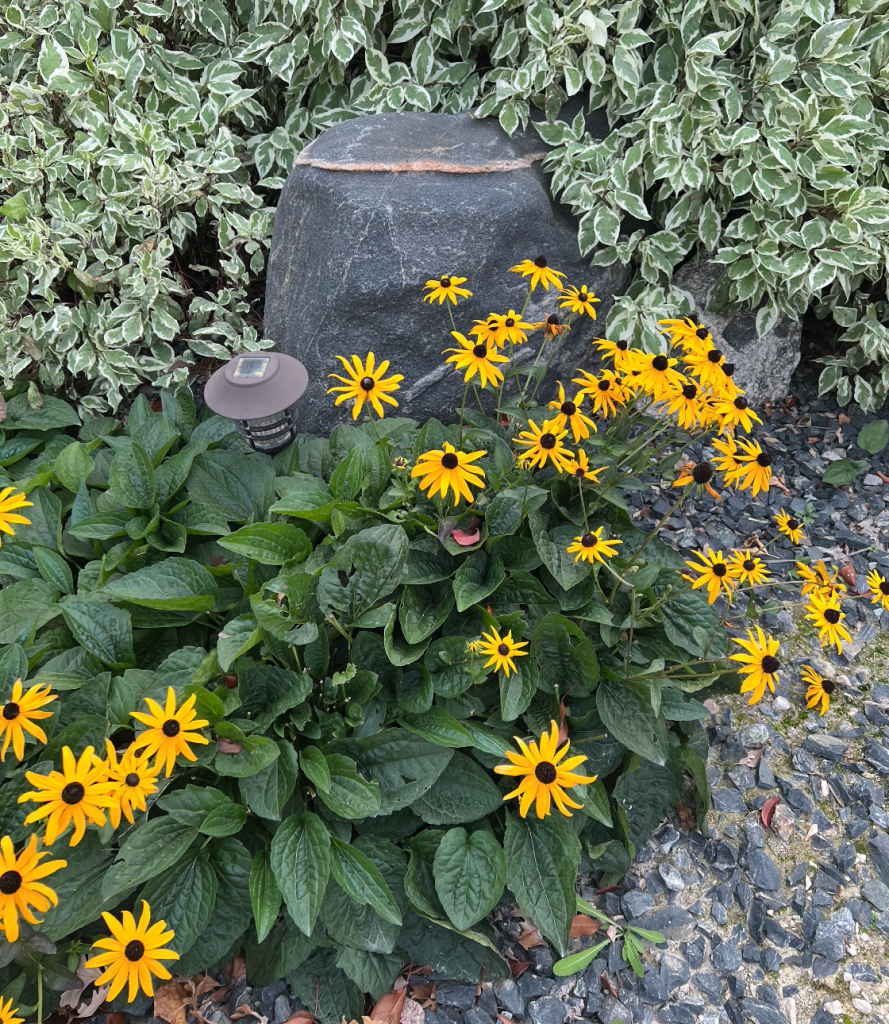
For shrub planting, you’ll just need a sharp, metal shovel to dig and fill your holes.
Again, do not add any additional compost or fertilizer to the soil.
Like trees, you don’t want your shrubs to start putting on new leaf growth in the Fall only for it to fall off with the first freeze.
You will instead fertilize come Spring!
How Big Of A Hole Should You Dig For Planting Trees And Shrubs
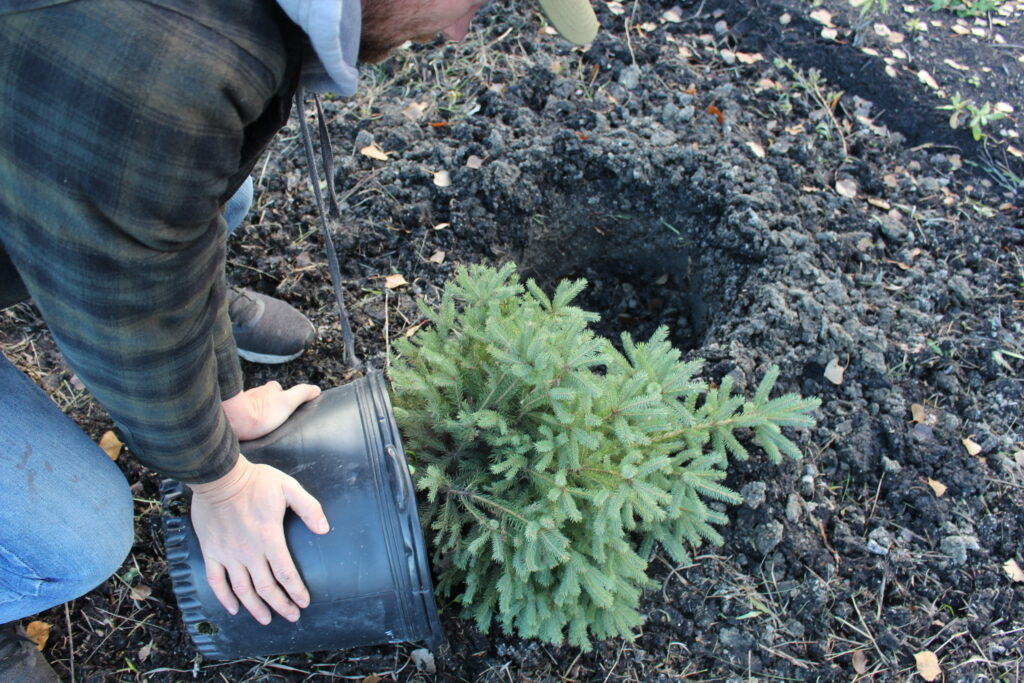
Here’s the trusted approach we’ve taken when digging tree holes for established trees.
Dig a hole that is as deep as the root ball (typically about 12-16 inches or so) but 2x as wide.
You’ve likely heard this before. Because it’s super important! And works!
The double width is a must. It ensures the roots have enough room to spread out.
Too little room and the roots will be stressed. This could result in distorted growth or stunted growth altogether.
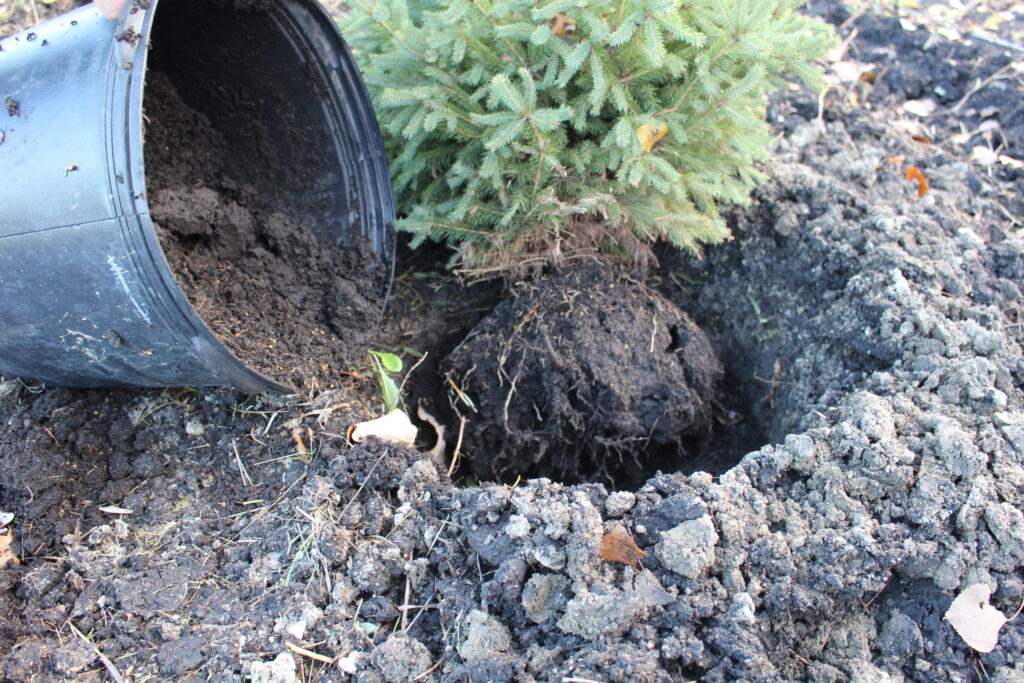
Now, if your trees are 8-10ft or larger, you may need to rent machinery (such as a skid steer) or hire experts to help.
Luckily, Shelmerdine offers tree planting services! More info here.
But to sum things up, always dig a hole that is the same depth as your tree or shrubs roots but double the width.
How The “Tight Tuck” Planting Method Protects Tree Roots From Frost
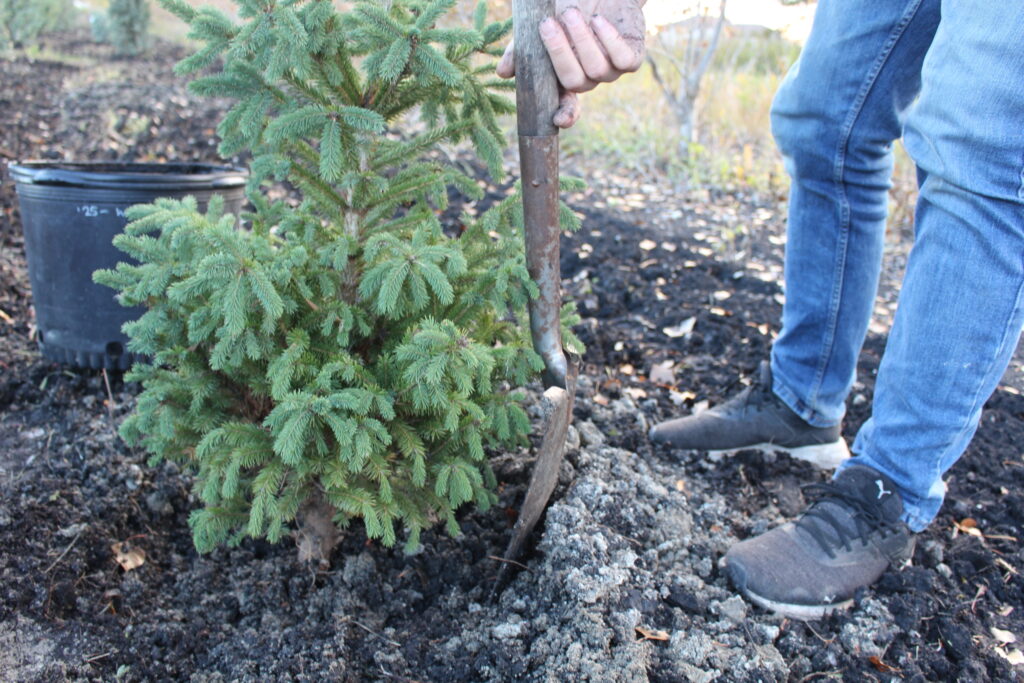
Now the biggest fear cold climate gardeners have with planting trees and shrubs in the Fall is worrying about roots freezing.
And this is a valid concern!
However there’s an easy way to solve it. And that’s what we call the “tight tuck” planting method.
The tight tuck ensures there’s no air pockets between the roots and the new soil. Air pockets are what put your plant at risk for damaged roots. So removing any is key!
So how do you do the “tight tuck” method?
First, use your hands to backfill the native soil gently around the root ball of your tree.
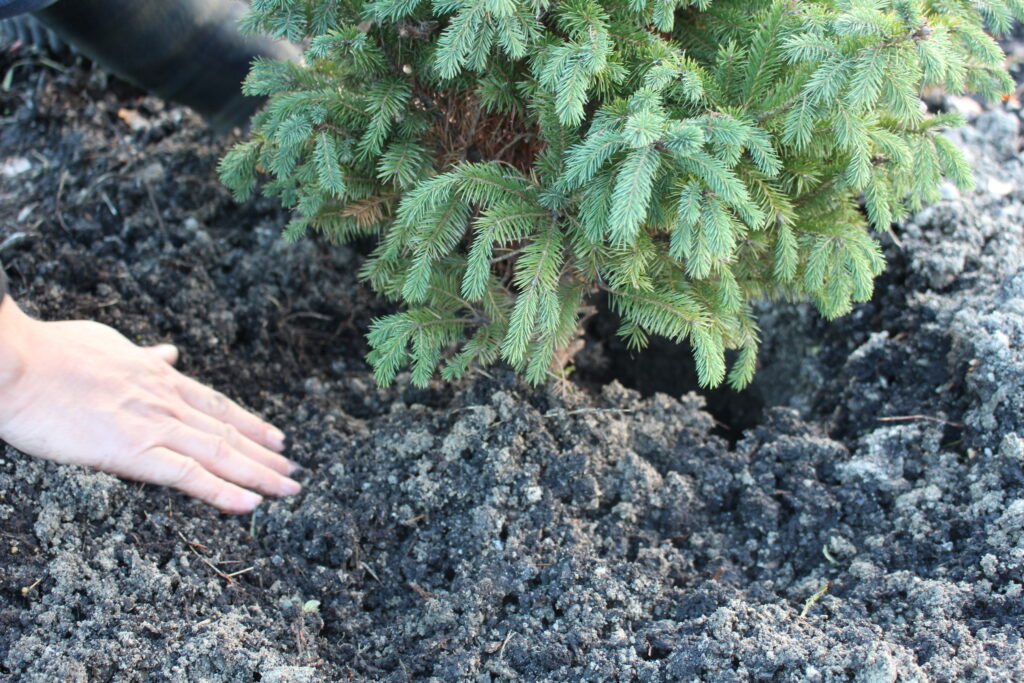
Next, tightly tamp in the backfill soil around the root of the plant using a shovel. We will go around the tree several times, “tucking” the soil in until it’s firmly packed.
Continue to repeat this process again and again until the soil is tight around the root ball.
Again, the goal is to ensure no frost pockets get into the roots.
Our tight tuck method not only insulates the roots but also helps with water retention.
From there, continue to add additional soil until it has created a low mound around the base of your tree.
How Much and How Often Should You Water Trees & Shrubs In The Fall

Now this next step is key. You MUST water your newly planted trees and shrubs in the Fall!
Northern gardeners often think that because rain and snow are in the near forecast, watering isn’t necessary. But that couldn’t be further from the truth!
Wet soil holds warmth much better than dry soil does. So newly planted trees and shrubs will thrive regular and consistent watering in the Fall.
This is especially true for evergreen trees. We find the more moisture they have, the less chances of getting wind burnt over Winter.
Don’t forget…sometimes we have +20°C afternoons even in October here in Manitoba. So yes, those newly planted trees and shrubs need watering.
Over Winter, snow will provide additional moisture. This sets your trees up for success come Spring.
Now that we’ve covered that you have to water, let’s break down how much and how often you should water your trees and shrubs in the Fall.
How Often Should You Water Fall Planted Trees:
Our thinking and approach with all the trees we’ve planted on our little 4-acre homestead has been to water daily until the ground freezes.
This may seem like a lot. But trees require adequate moisture to develop strong roots.
We love using soaker hoses. And we’ll even let them run overnight if we’ve had a dry Summer.
So water trees daily and don’t worry about “overdoing” it.
If you see standing water on top of the soil, take a few days off. But likely your trees and the soil will absorb it.
How Often Should You Water Fall Planted Shrubs:
Since shrubs are much smaller plants, water a few times per week after planting.
Again, if you see standing water on top of the soil, take a few days off.
Or if you’re having a rainy Fall, wait until it dries up a bit.
And there you have it!
Those are our 5 key steps in our step-by-step approach to planting shrubs & trees in the Fall in Zone 3.
Now, let’s get into Winter care a little bit more!
How To Protect Your Trees From Harsh Manitoba Winter Weather
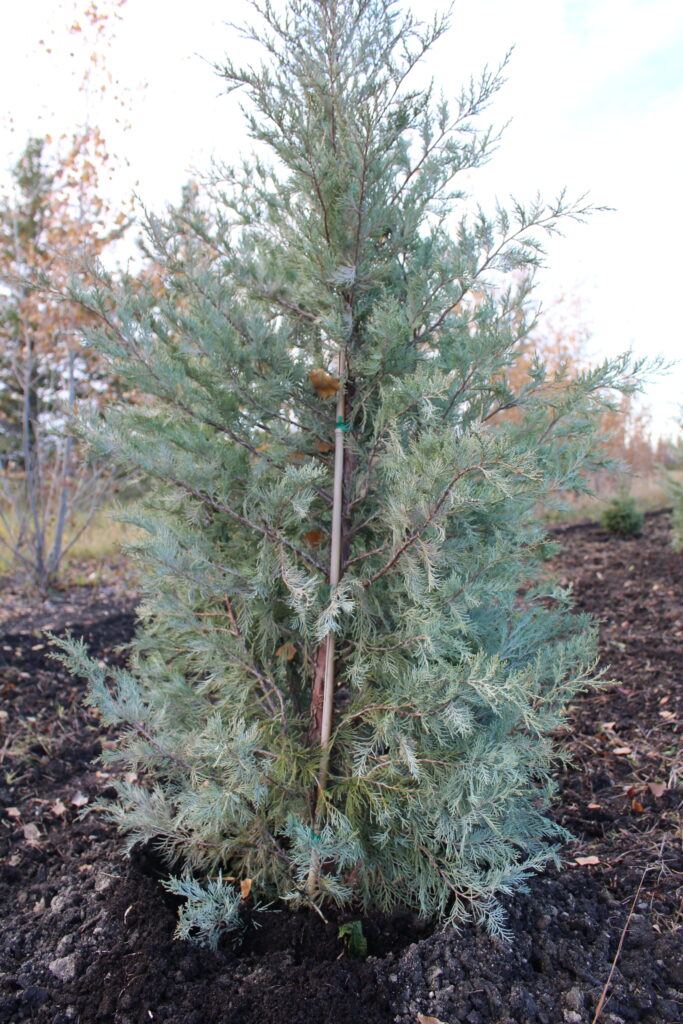
As mentioned above, planting trees and shrubs in the Fall is really the first step to setting them up for success for survival throughout Winter.
But to improve your chances even more, there are a few additional things you can do to protect your trees from harsh, Canadian Winter weather.
First, and what we’ve already mentioned, water!
Watering trees heavily in the Fall helps protects your roots from getting damaged by frost. The moisture actually acts a protective barrier since wet soil stays warmer than dry.
Next, you can apply a layer of organic mulch to insulate the roots and retain moisture in the soil.
This is especially necessary for shrubs. And for trees that are still in containers rather than in ground.
There’s many different types of mulch you can use, but we’ve found wood chips are the most heavy-duty for tree roots.
For shrubs, I prefer using something a bit lighter such as leaves and/or GardenStraw. Both really help with moisture retention.
Another way to protect your trees is setting up a snow fence to act as a barrier from wind blown snow accumulating near your trees.
This is easy and inexpensive to do. Definitely recommend starting here!
Finally, you can also use tree wraps or burlap to protect your trees throughout Manitoba Winters.
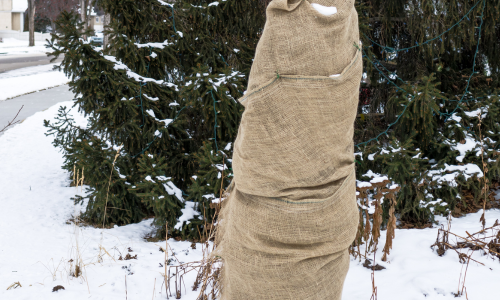
While this is a really popular approach with many gardeners, it’s not something we have done personally and our trees have always done really well.
Instead, one thing we have instead done is put plastic tree guards around the base of our tree to protect it from deer and rabbits who are looking for bark to munch on during the Winter.
This works great, I highly recommend!
How To Maximize Tree Growth In A Short Growing Season
Finding ways to help your trees grow quickly is what everyone wants to know, right? Of course!
Trees take a long time to get established so first off, patience is key!
As mentioned above, selecting a hybrid variety can also help speed things up.
For example, our Prairie Sky Poplar trees are hybrids and have grown over +20ft tall in about 6 years!
Other things we’ve found that maximize tree growth in our short growing season is keeping our tree line well maintained, including tilling it with our tractor as well as by hand to manage weeds.
Weeds can quickly choke out tree roots when first establishing. We typically till our tree line 2-3x throughout the growing season. And weed by hand around individually planted trees.
We also prioritize watering often and heavily in the Spring when the soil is dry and our trees are just starting to put on new growth again.
This is so, so important! And can really make all the difference with how much your trees grow within a season.
Don’t only depend on Mother Nature and rain fall.
A little extra help with watering will go a long way. Try out soaker hoses — they’ll save you time and keep the soil consistently moist.
And finally, be sure to prune and fertilize your trees during the Spring and Summer months to help with growth.
Simply use pruning shears to remove any branches that are damaged or dying. This allows the tree to focus its energy on putting on new growth.
For fertilizing, we like to top dress our trees with a thick layer of compost at the beginning of the season.
We usually just do this once because we have a lot of trees and not that much free time (as I’m sure many of you are in the same boat!).
But you could easily organically fertilize your trees a few times throughout the season to really maximize growth.
Just be sure to stop fertilizing well before Fall so your trees can focus on root growth and preparing for Winter rather than growing new foliage.
And there you have it!
Now you know why Fall is the best time to plant trees and shrubs in Manitoba as well as our step-by-step approach for planting success!
I hope you found this post helpful covering Our Easy 5 Step Approach to Planting Shrubs & Trees In The Fall In Zone 3 – A Complete Guide
If you have any unanswered questions regarding planting trees or shrubs, be sure to comment below. I love hearing from you and answer all comments.
And a huge thank you to our sponsor, Shelmerdine Garden Centre.
We’re thrilled with the trees we’ve purchased from them this season! Definitely encourage you to check out their nursery. Their staff is a huge help and very knowledgeable too.
You can follow @fromsoiltosoul on Instagram and Pinterest for more gardening content too.