
A Complete Guide To Growing Brassicas In Zone 3,4 & 5 (Cabbage, Broccoli, Kale + More)
As a Northern cold climate gardener, you already know — short seasons and unpredictable weather can make vegetable gardening tricky. The good news? Brassicas are made for cool climates! Here in our Zone 3 Canadian garden we’ve actually found our brassicas perform better than many other warm season crops. Though there’s definitely a few tips and tricks we’ve learned over the years to make growing brassicas, like broccoli, cabbage, kale and cauliflower, easy. In this complete guide to growing brassicas in Zone 3,4 and 5, you’ll learn exactly how to grow brassicas successfully in cold climates. So let’s get into it, covering everything from seed starting, soil prep, pest control and harvesting.
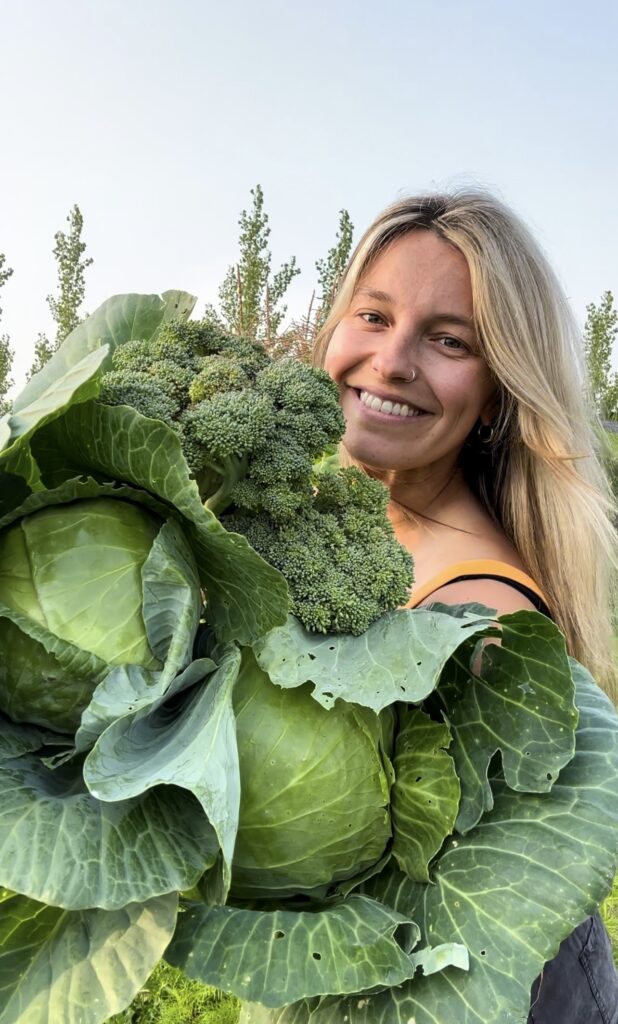
Brassica Quick Growing Notes:
Vegetable: Brassicas (most commonly includes cabbage, kale, broccoli)

Latin name: Brassicaceae or Cruciferae

Difficulty level: Moderate

Life cycle: Annual

Sun exposure: Full-sun

Days to maturity: 50-95 days (ranges depending on plant and variety)

Timing: Start indoors mid-March for an early Spring harvest or mid-August for Fall harvest

Planting seed depth: Sow seeds 1/4" deep

Soil needs: Well draining soil that's been well-amended with compost and organic fertilizer
This post covers (click any link to be brought directly to that section):
- What Are Brassicas (And Why They Thrive in Cold Climate Gardens)
- Why Zones 3,4 and 5 Are Actually Ideal for Growing Healthy Brassica Plants
- Best Brassica Varieties For Cold Climates (Broccoli, Kale, Cabbage, Brussel Sprouts and More)
- Starting Brassicas From Seed vs. Buying Transplants From A Greenhouse — What’s Better?
- Zone 3, 4 & 5 Brassica Seed Starting Timeline (The MOST Important Part)
- How and When To Transplant Brassicas Out To Garden
- 3 Top Tips For Caring For Brassicas — Soil, Water & Fertilizer
- 3 Most Common Brassica Problems & How To Avoid Them
- Should You Cover Brassicas And How To
- How To Harvest Brassicas
What Are Brassicas (And Why They Thrive in Cold Climate Gardens)
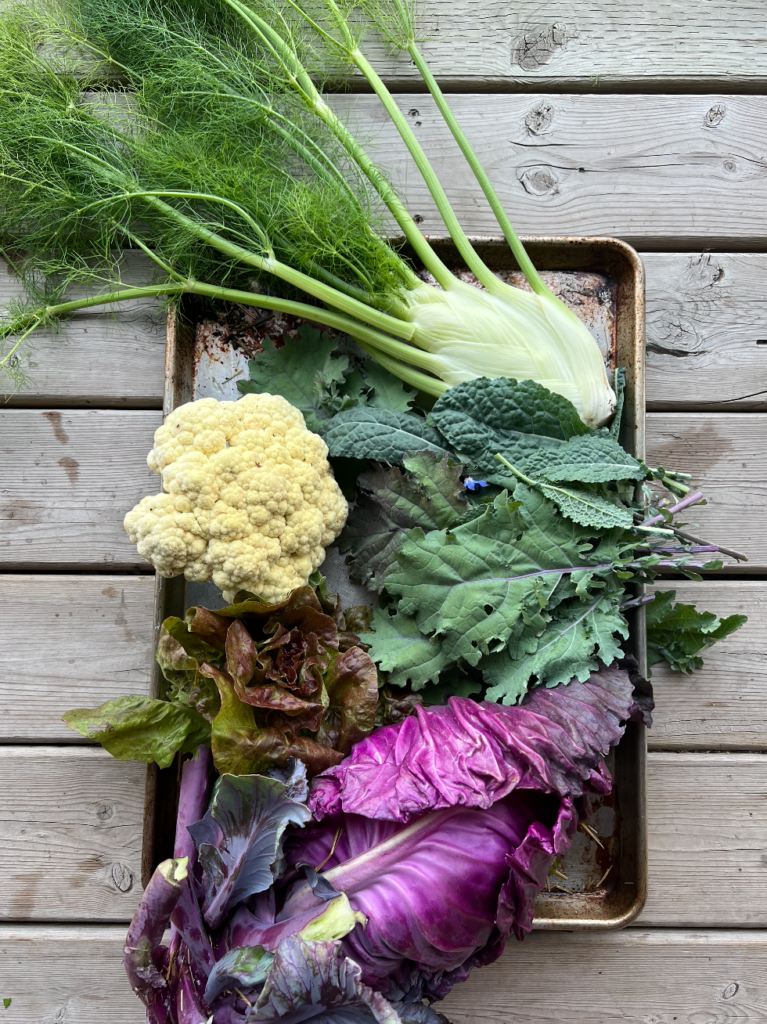
Let’s start with what is considered a brassica.
Simply put, brassicas are cool-season vegetables in the Brassicaceae family.
There’s many different vegetables that fall under the brassica name, including but not limited to:
- Broccoli
- Broccoli Raab
- Cabbage
- Cauliflower
- Kale
- Brussels Sprouts
- Collard Greens
- Mustard Greens
- Kohlrabi
- Tat soi
- Bok choy
So as you can see, brassicas include many different and delicious vegetables that really range in flavour and appearance. You could totally grow a garden of just brassicas and it would look diverse and colourful!
Now, why do brassicas thrive in cold climate gardens like Zone 3, 4 and 5?
Because they are cool season crops that actually grow better in mild to moderate Spring & Fall temperatures. Making them a perfect fit for us Northern gardeners!
Better yet, cold nights and even light frosts will make your brassicas even tastier.
Why Zones 3, 4 and 5 Are Actually Ideal for Growing Healthy Brassica Plants
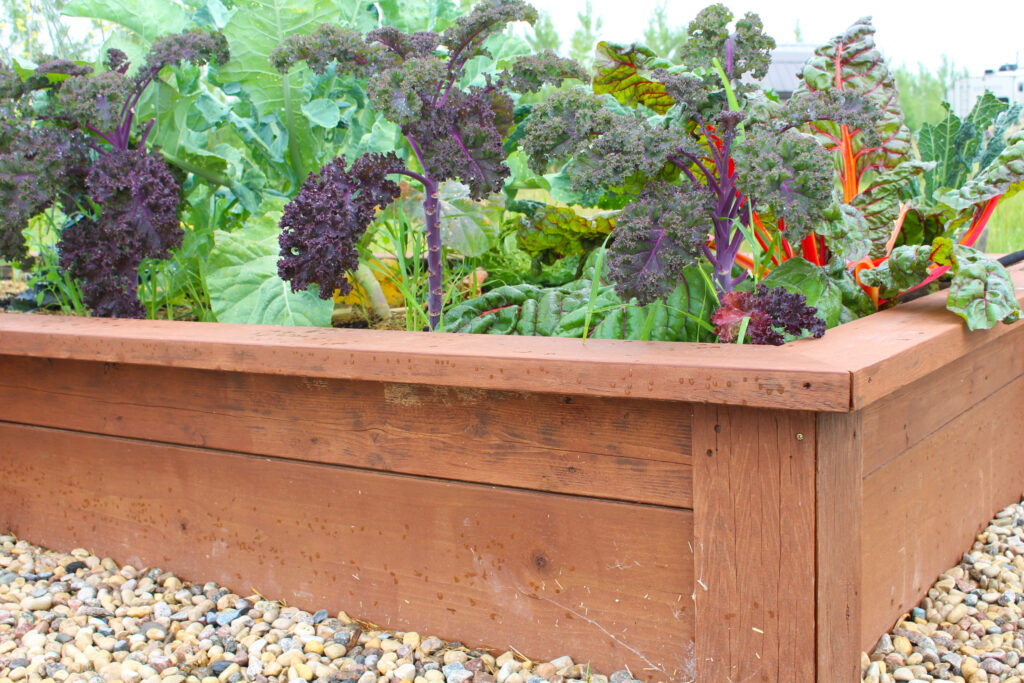
One of my goals with this blog is to change the narrative that gardening in a cold climate limits you. And brassicas are the perfect crop to challenge that thinking!
Zone 3, 4 and 5 are actually ideal for growing brassicas for two key reasons:
- Our distinct shoulder seasons — we typically have cool Spring & Fall seasons, which brassicas love
- Mild temps in early Summer — the average temps at the start of Summer are more mild and suitable for maturing brassicas
All this to say, if you haven’t grown brassicas before and you garden in a cold climate — this is your sign to grow them this season!
Best Brassica Varieties For Cold Climates (Broccoli, Kale, Cabbage, Brussel Sprouts and More)
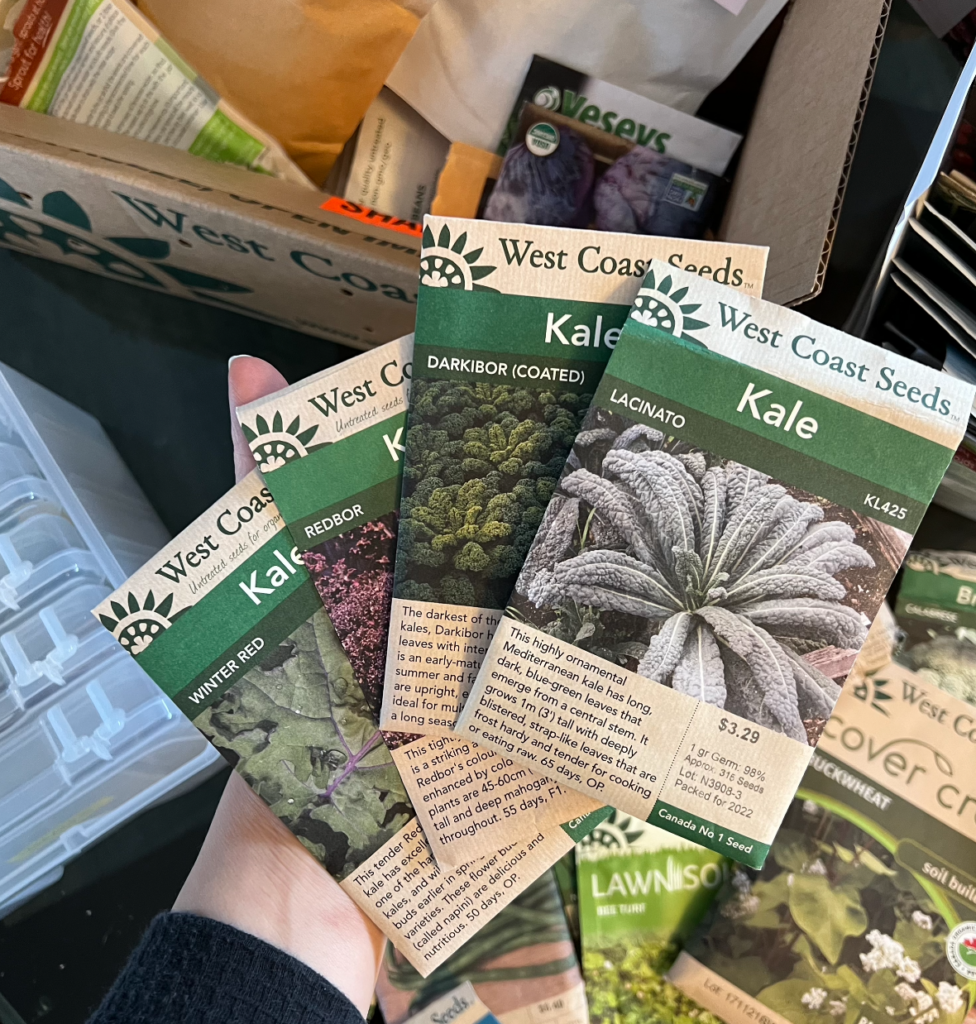
“What’s the best variety” is a question that always comes up. But ultimately, the best brassica for your garden will be based on your gardening goals and preferences.
It’s safe to say, that overall you should look for these key qualities when choosing a brassica variety:
- Disease and/or bolt resistant — this will help deal with common brassica problems
- Hybrid variety — not necessary, but does mean the plant has been bred for colder climates and may do better in your garden
However, since I’ve grown my fair share of different brassicas over the years, let me break down some of our favs from a few different “categories.”
Click any link below to shop for that exact variety from my preferred seed supplier, West Coast Seeds.
Best Reliable & Productive Brassica Varieties For Zone 3
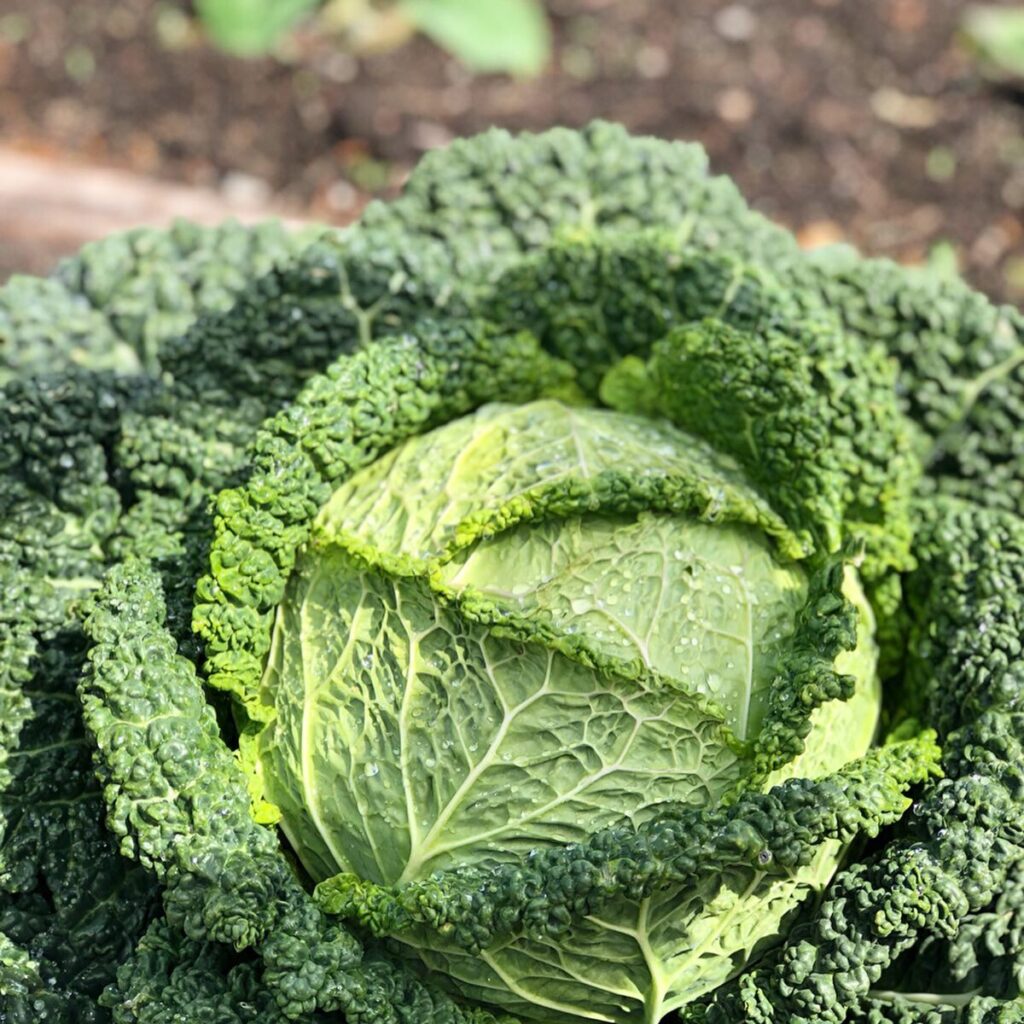
- Capriccio Cabbage (linked here) — love starting seeds for this one in mid Summer for a Fall harvest
- Kalibos Cabbage (linked here) — produces large, upright dark purple cabbages that are highly pest-resistant, love these!
- Darkibor Kale (linked here) — our go-to kale variety that does not bolt in the Summer heat, we harvest from the same plants from Spring to Fall
- Belstar Broccoli (linked here) — a really adaptable broccoli that will do well in Spring, Summer & Fall
- Skywalker Cauliflower (linked here) — produces perfectly uniform medium-sized cauliflower heads
- Silvia Brussels Sprouts (linked here) — a really early maturing variety of brussels sprouts, ready to harvest in about 100 days
Best Unique & Fun Brassica Varieties For Zone 3
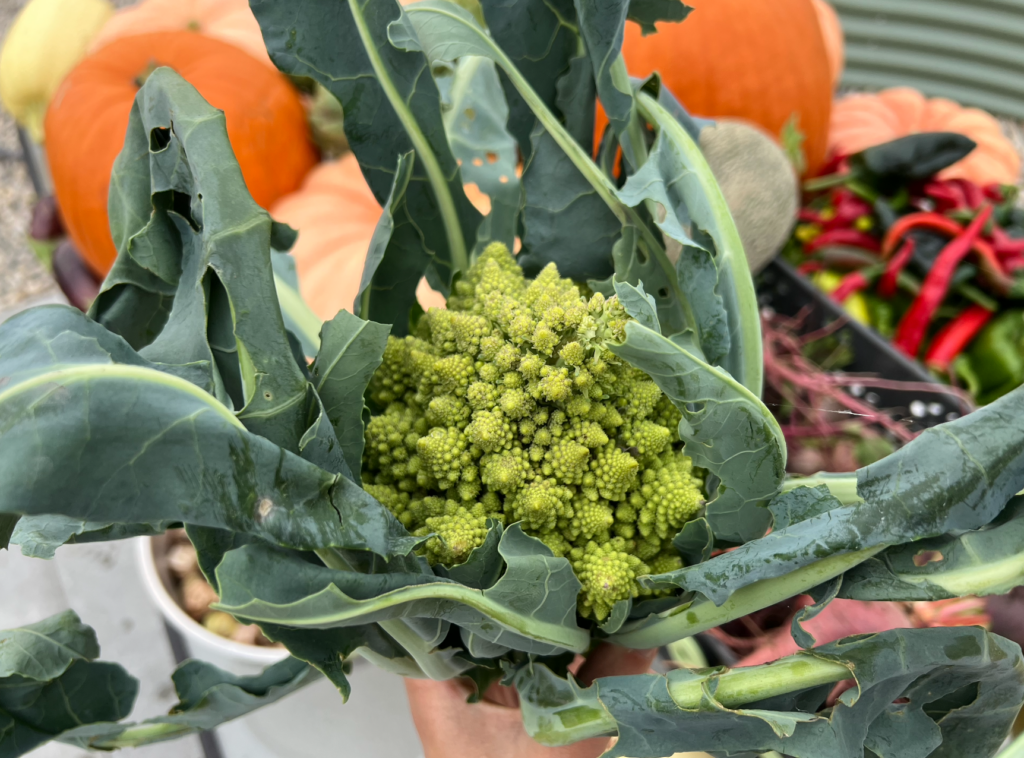
- Purple Moon Cauliflower (linked here) — as the name suggests! Dark purple cauliflower that tastes as great as they look.
- Kohlrabi (linked here) — one of my fav brassicas because of how delicious it is as a kraut or in salad, plus really pest-resistant.
- Tah Tsai (linked here) — a really productive and delicious Chinese green that thrives in Spring + Fall.
Starting Brassicas From Seed vs. Buying Transplants From A Greenhouse — What’s Better?
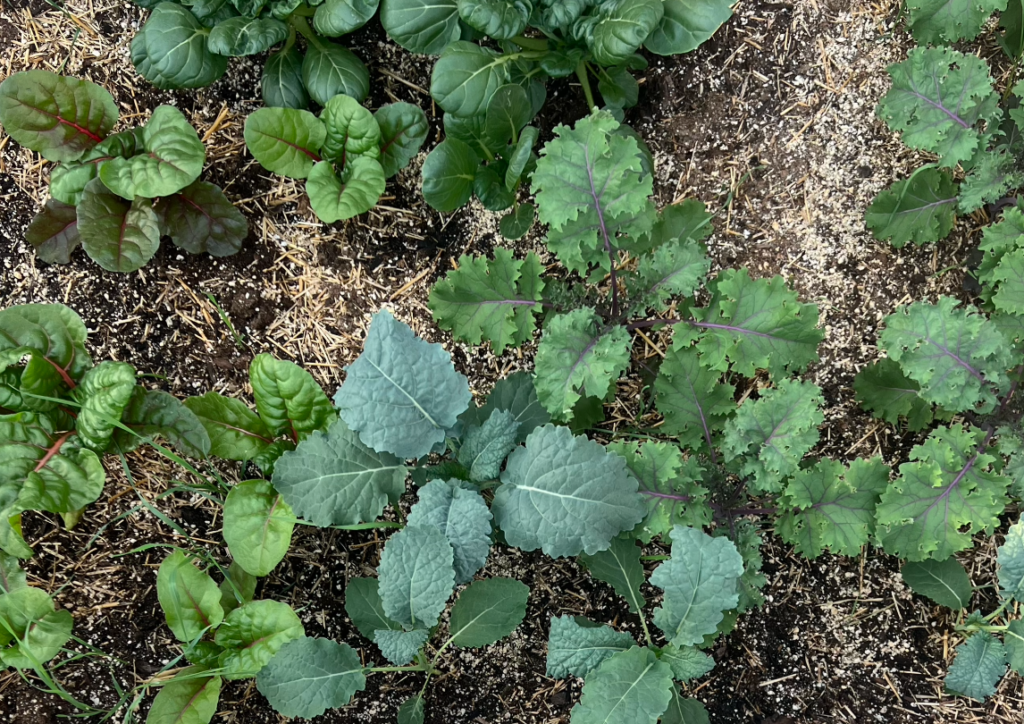
In my opinion, there’s pros and cons for both buying your brassica seedlings started from a greenhouse vs. starting the seeds yourself.
And I don’t necessarily think one is far better than the other. The choice is yours based on your gardening goals.
So let me weigh in on the benefits of each…
Benefits To Starting Your Brassica Seedlings From Seed
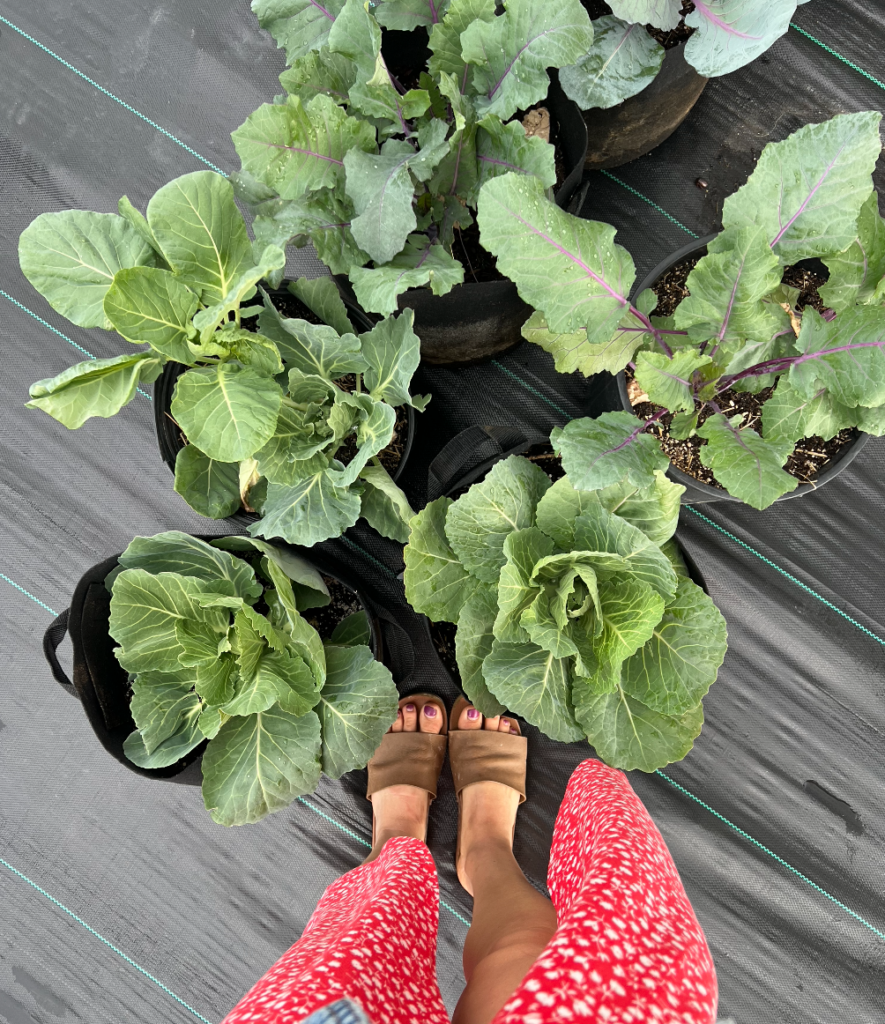
- Saves money — a pack of seeds will cost a few dollars compared to that same price for a single transplant
- Better variety options — a greenhouse will likely only have a few varieties to choose from whereas starting from seed provides endless options
- Healthier, more resilient plants — typically seedlings started at home tend to do better since they aren’t shocked when leaving the humid environment of the greenhouse when brought to your home
- Ability to time when you plant them out — since brassicas do best in shoulder seasons, starting from seed means you can work with your own timeline instead of waiting til they’re available
Benefits To Buying Your Brassica Seedlings Already Started From A Nursery/Garden Centre
- Less work — you don’t have to love seed starting to grow a great garden and buying started plants is one solution to this
- Mature plants — typically garden centre seedlings have already been growing for weeks by the time you buy them so they’ll have a bit of a head start
- Ability to grow many of one variety — you’ll likely have to purchase a pack of 4-6 seedlings
- Support your local garden centre — a great way to show a small business some support
Zone 3, 4 & 5 Brassica Seed Starting Timeline (The MOST Important Part)
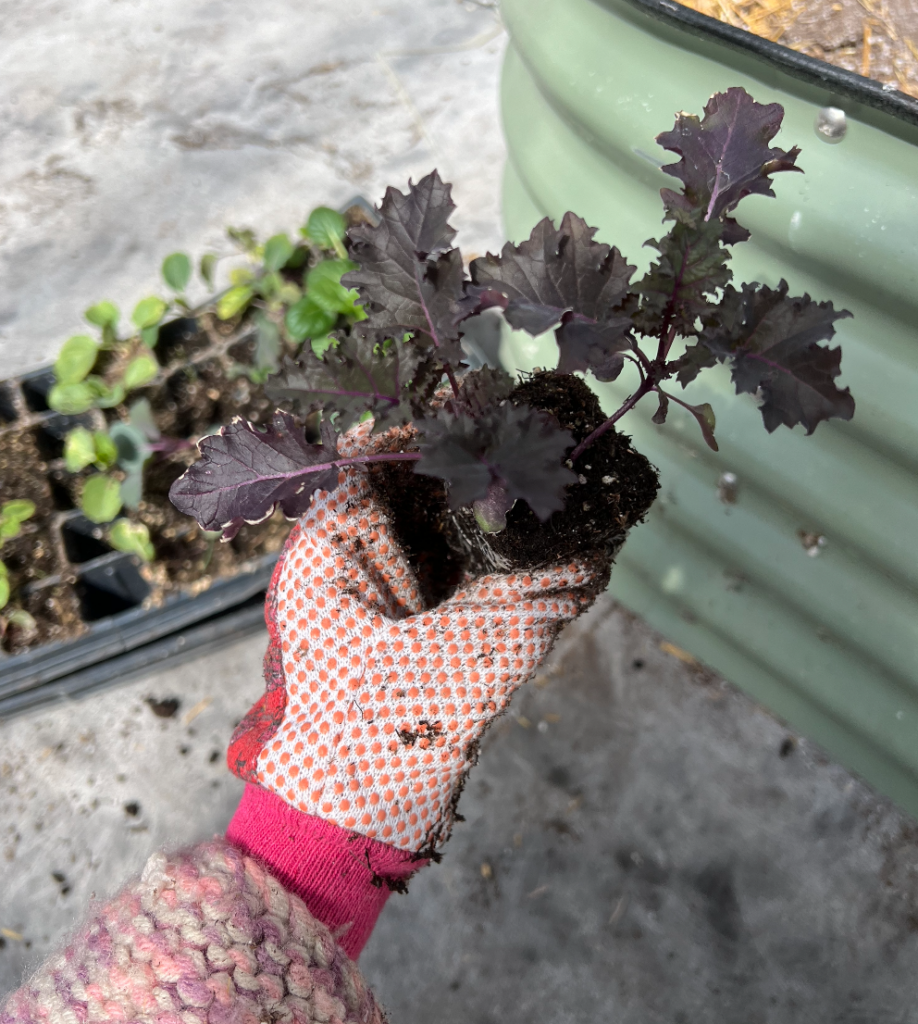
Timing is EVERYTHING when it comes to seed starting. And this is true for brassicas too.
I usually like to start my brassica seeds indoors about 8-10 weeks before I want to transplant them outside.
But there’s one key thing to remember here.
Brassicas can not be direct sown in Zone 3,4 and 5 gardens. The season is too short. They must be started from seed and transplanted out.
Now the timeline for when exactly to start your brassica seeds really depends on whether you’re growing plants for a Summer or a Fall harvest.
For example, I like to start some of my brassicas as early as Feb-March to be able to harvest by the end of June.
Whereas any brassicas I plan to harvest in the Fall, I start seeds for by mid-July to mid-August.
So again, there’s no exact right answer here.
You can count the days to maturity on your seed packet to determine when to start your brassica seedlings.
For example, if you’re growing brussels sprouts that require 100 days to maturity and you want to harvest before the heat of Summer, you should start your plants as early as mid-Feb to mid-March.
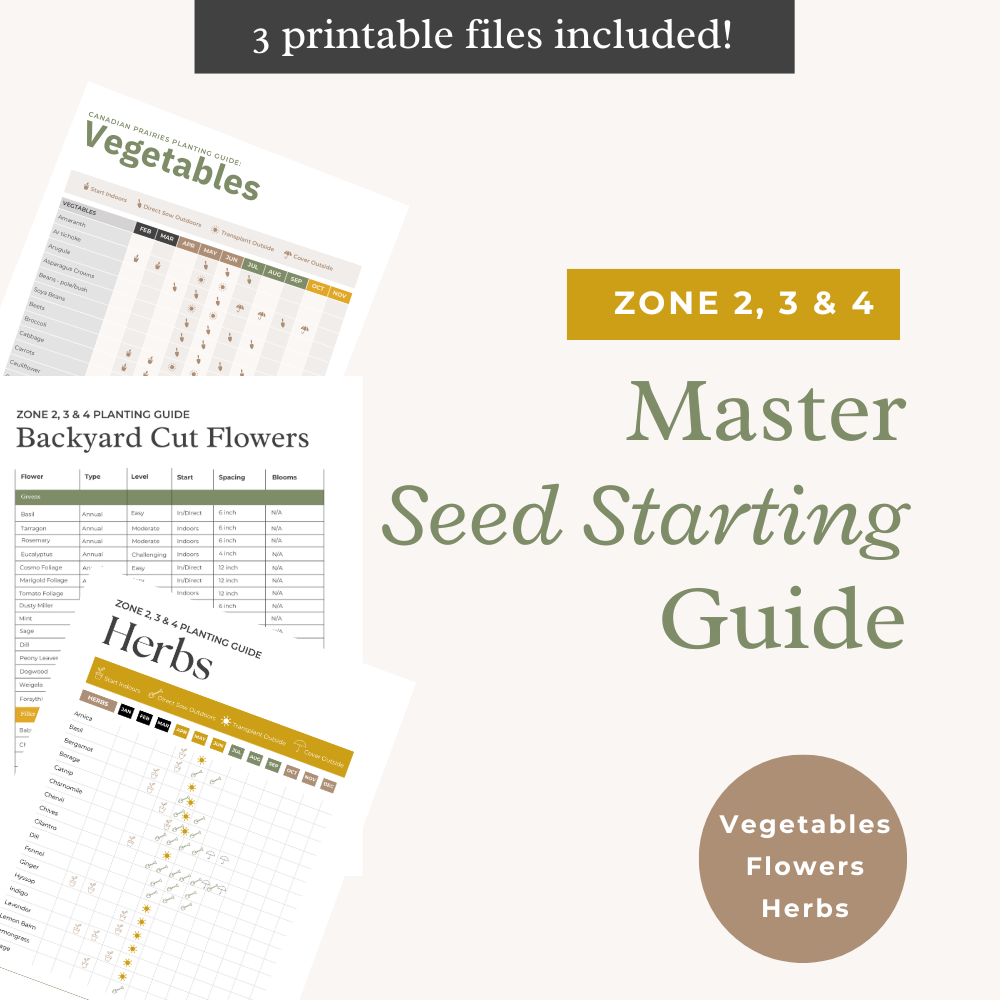
For more exact dates and seed starting timelines, download my Master Seed Starting Guides!
How and When To Transplant Brassicas Out To Garden
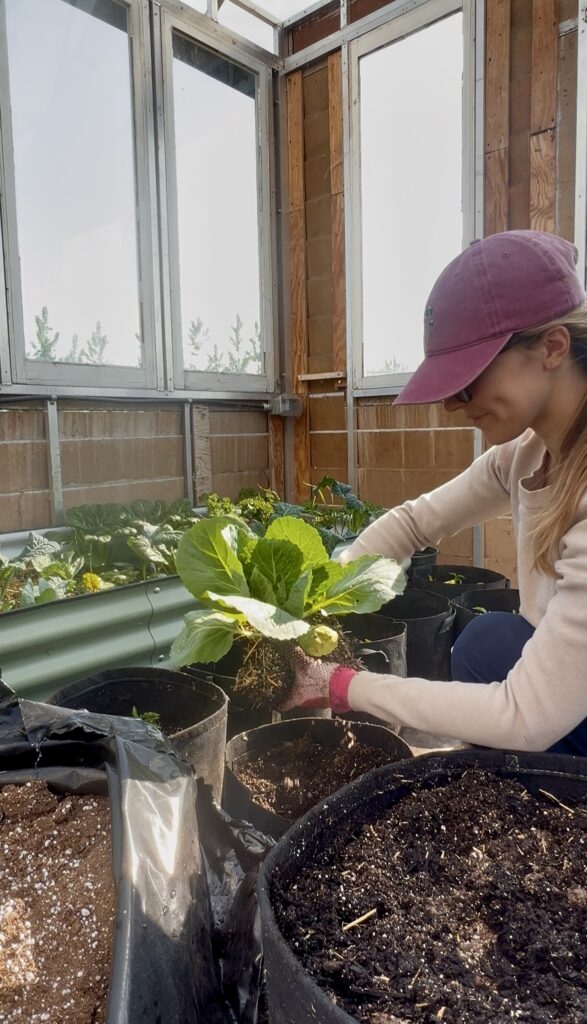
Since brassicas are cool season crops, they can be planted out to your garden in early Spring. Even before your average last frost date!
Now that isn’t to say you can just stick them in the ground and have success.
So here’s 4 easy-to-follow steps for transplanting brassica seedlings outdoors in Zone 3, 4 and 5.
- Gradually harden off your seedlings outdoors for a minimum of 5-7 days before transplanting
- Ensure your soil is workable and no longer frozen. You can warm it up under a row cover or hoop house if needed.
- Transplant in early morning or late afternoon to avoid the heat of the day, which will stress out brassica seedlings
- Transplant into nutrient-rich (compost amended) soil that is nice and damp
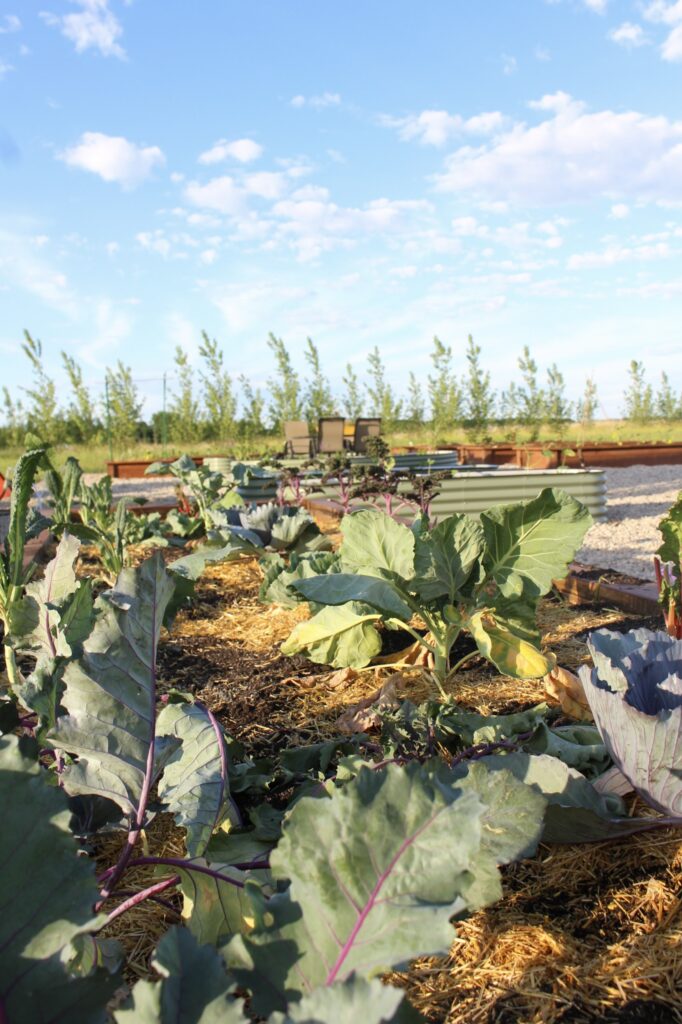
Remember, brassicas actually love cooler weather. So don’t be afraid to get them transplanted in early Spring.
We’ve had years where we have our plants in the ground under a row cover (more on that later) as early as April.
All this to say, you can transplant Spring brassicas before your last frost date and up until about 70 days before your first Fall frost.
3 Top Tips For Caring For Brassicas — Soil, Water & Fertilizer
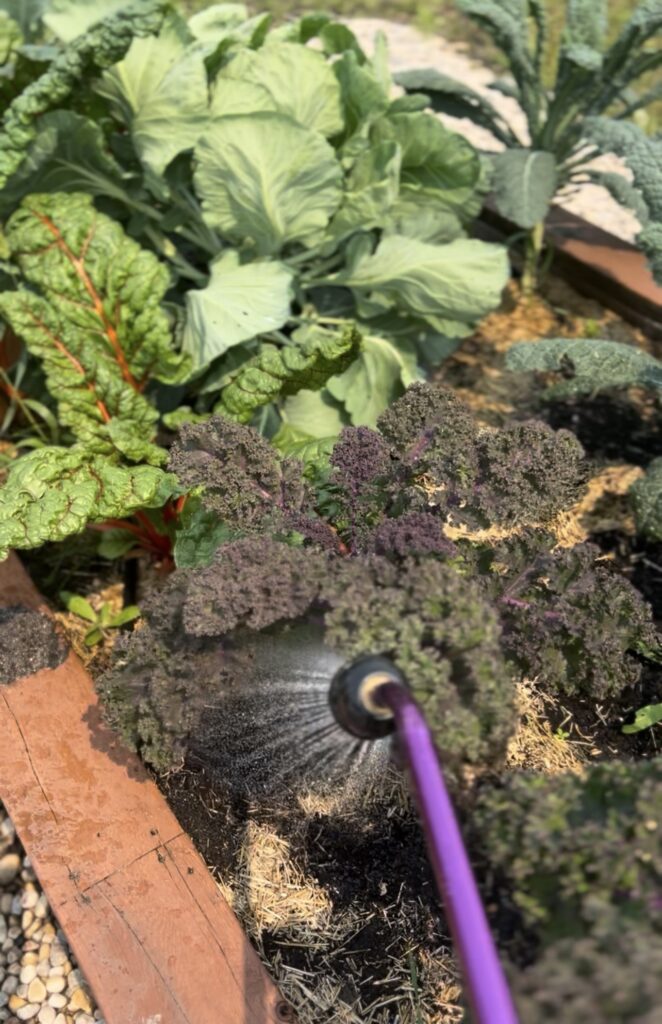
Brassica Tip 1: Plant in an area that gets partial sun and/or some afternoon shade.
As mentioned, brassicas are cool season crops and thrive in some shade. This first tip is especially important if you’re transplant seedlings in Summer for a Fall harvest. Be sure they have some access to shade! This will help avoid bolting.
Brassica Tip 2: Add compost before planting and mulch around plants to keep soil cool and moist.
Brassicas are heavy-feeders and benefit from nutrient rich soil. Add a heavy hand of bagged organic compost around the base of each plant. Then mulch with an organic matter like straw, my personal fav mulch! More on that here.
Brassica Tip 3: Water consistently at the base of the plant, wet foliage can cause disease.
Brassicas will get stressed in they are in a drought, so be sure to water regularly. Soil should not dry out. Mulch will help with this! A wand or drip irrigation system works great for targeted watering at the base of the plant.
3 Most Common Brassica Problems & How To Avoid Them
Unfortunately, brassicas are a crop that do tend to cause home gardeners some problems.
Luckily, I have some solutions!
So here’s 3 of the most common problems I’ve faced when growing brassicas and simple solutions.
Brassica Problem 1: Pest pressure!
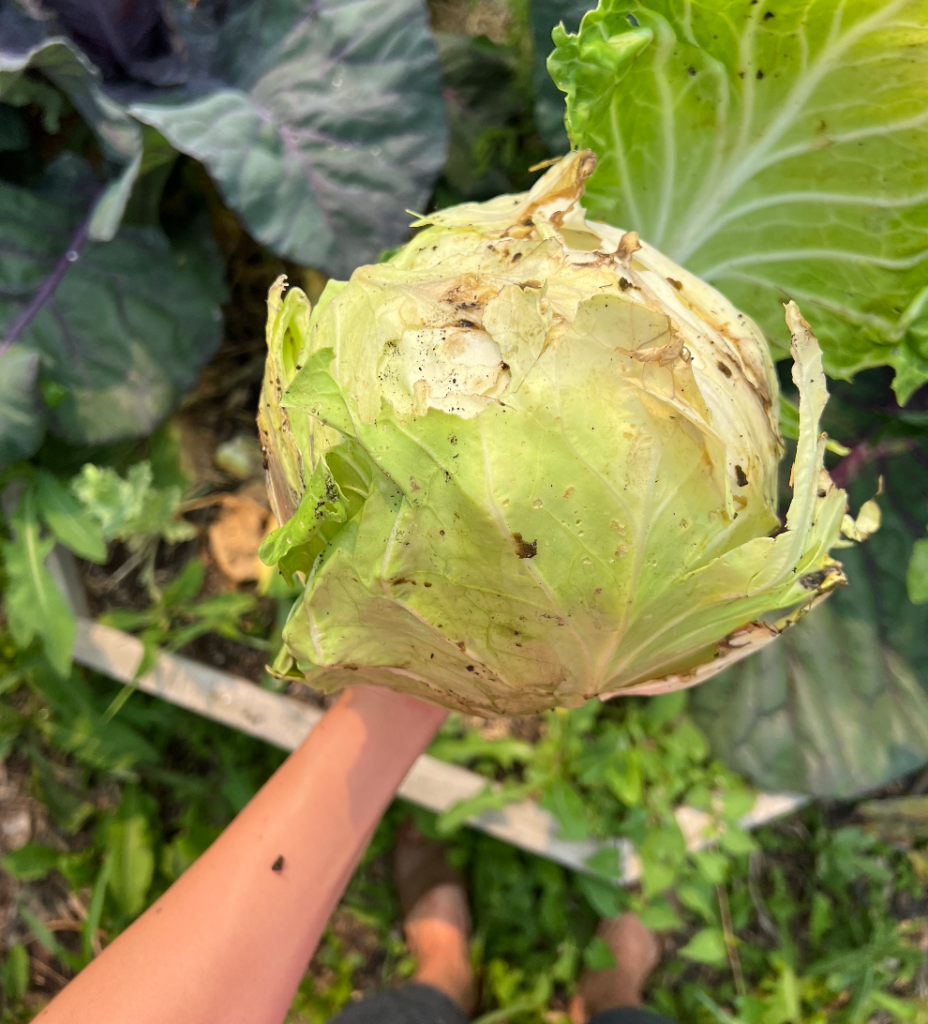
Cabbage worms, slugs, flea beetles, gnats…you name it! Brassicas can really attract a lot of different pests.
An easy solution is to cover your brassicas with a light weight row cover. More on that below!
As an organic gardener, I personally do not spray anything on my brassica crops to keep pests away. I’ve found either covering them or planting in a container or raised bed works just fine to keep pests away.
Brassica Problem 2: Plants bolting to flower in heat!
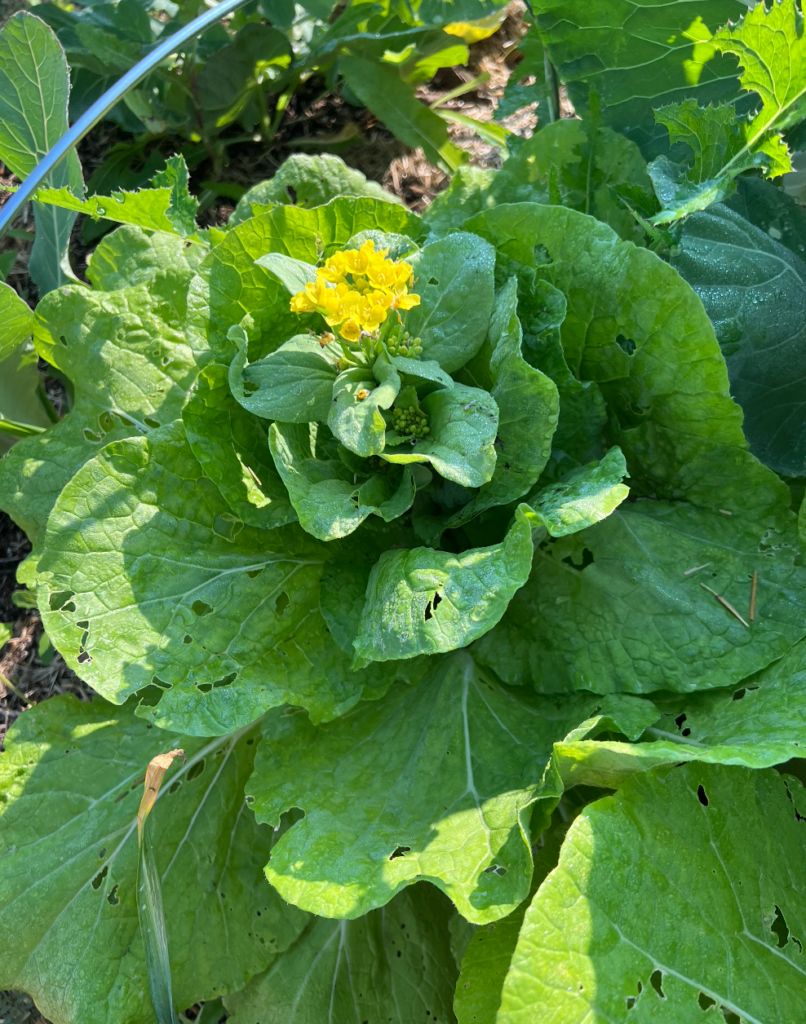
Bolting brassicas is seriously so annoying!
You do all this work and then your plants start to bolt and flower before you get a chance to harvest.
This issue is due to heat stress. And usually occurs when brassicas don’t have access to shade. Or when they’re grown in the middle of Summer.
So two simple ways to solve the issue…
- Provide some shade or shelter with a row cover.
- Grow brassicas during the shoulder seasons instead so the sun isn’t as strong
Brassica Problem 3: Stunted plants
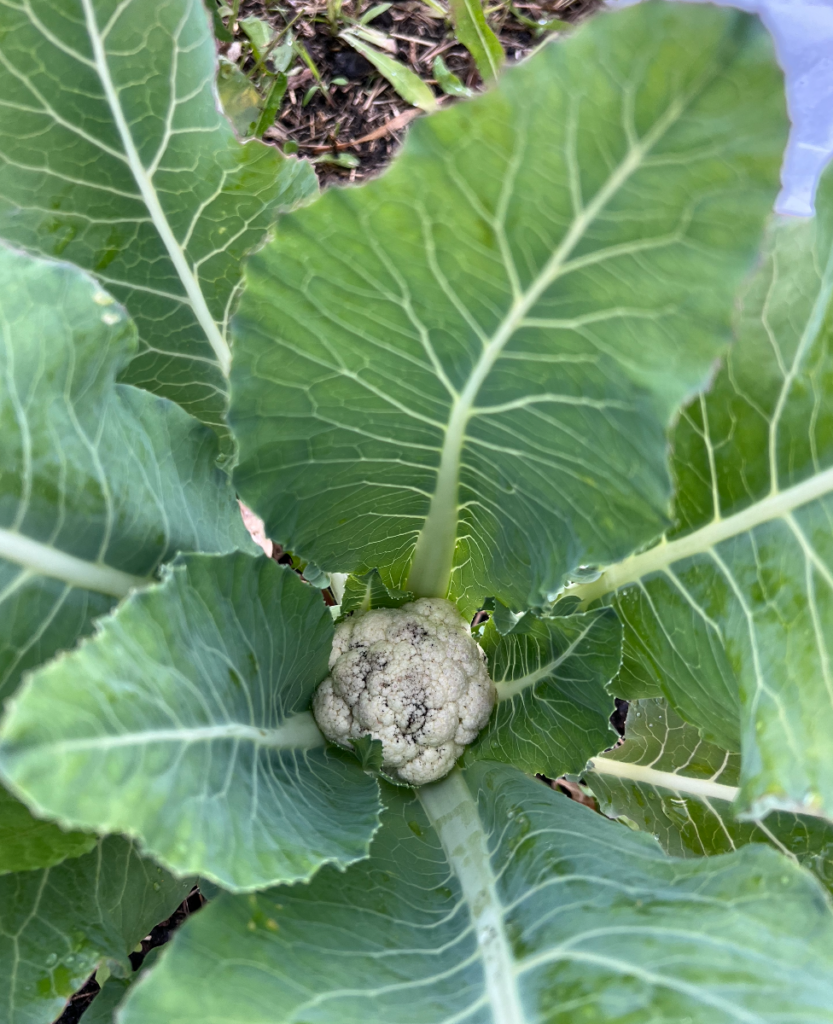
And the last common brassica issue I see and have experienced is stunted plants.
Now this typically happens if your brassicas don’t have enough nutrients or water.
I personally like fertilizing my brassicas with compost. I simply put a heavy hand of it around the base of each plant. But you could also apply an organic all purpose fertilizer too.
When it comes to watering, avoid letting your soil completely dry out. Like I said above, mulch helps with this greatly! But creating a watering schedule that works for you is also a great solution.
Should You Cover Brassicas And How To
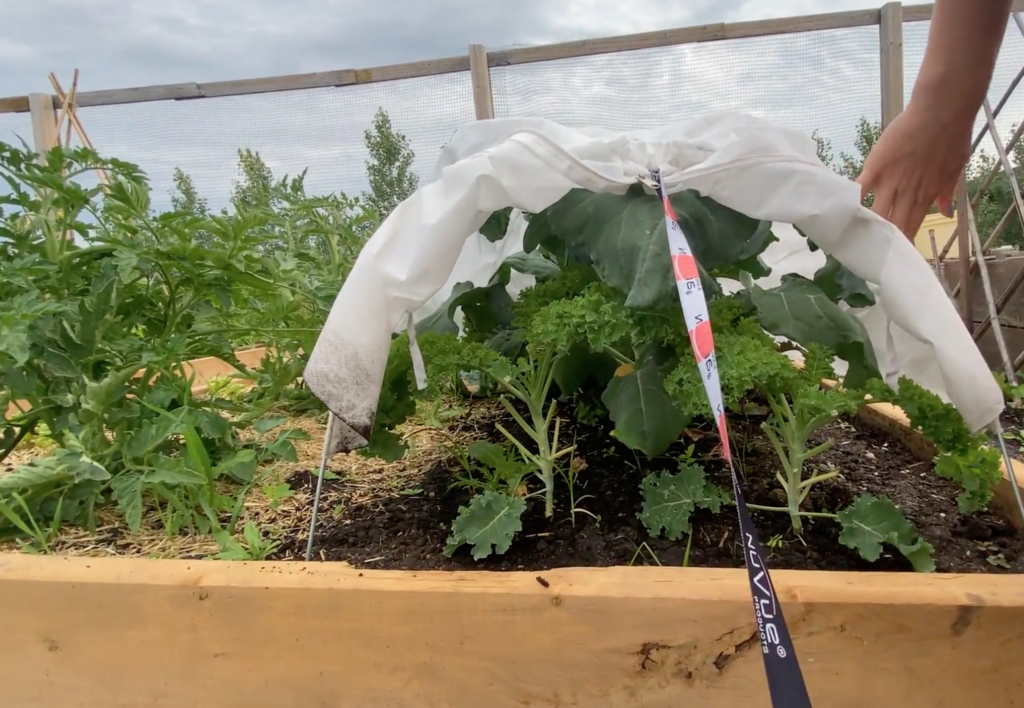
Yes! You should absolutely cover your brassicas with a light weight row cover to avoid…
- Pest pressure
- Heat stress
- Hard frosts (extend your season into late Fall and start it earlier in the Spring)
You could also use a mesh netting like this one. However that only solves the pest issue. Hence why I suggest the row cover instead!
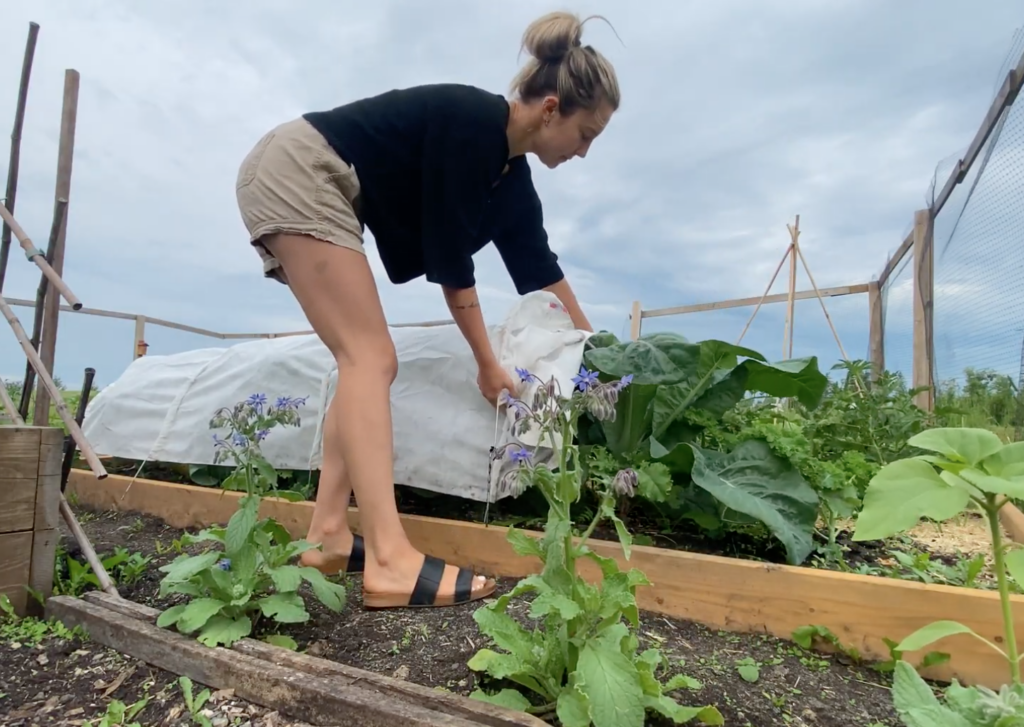
Using a row cover is really easy!
You can either purchase a complete system like this one pictured above that comes with the cover, hoops and clips. So all you have to do is set it up!
Or you can purchase just the row cover itself and then create something more DIY.
There’s so many creative ideas on Pinterest to check out for inspiration too.
Personally, I like using this all in one solution!
How To Harvest Brassicas
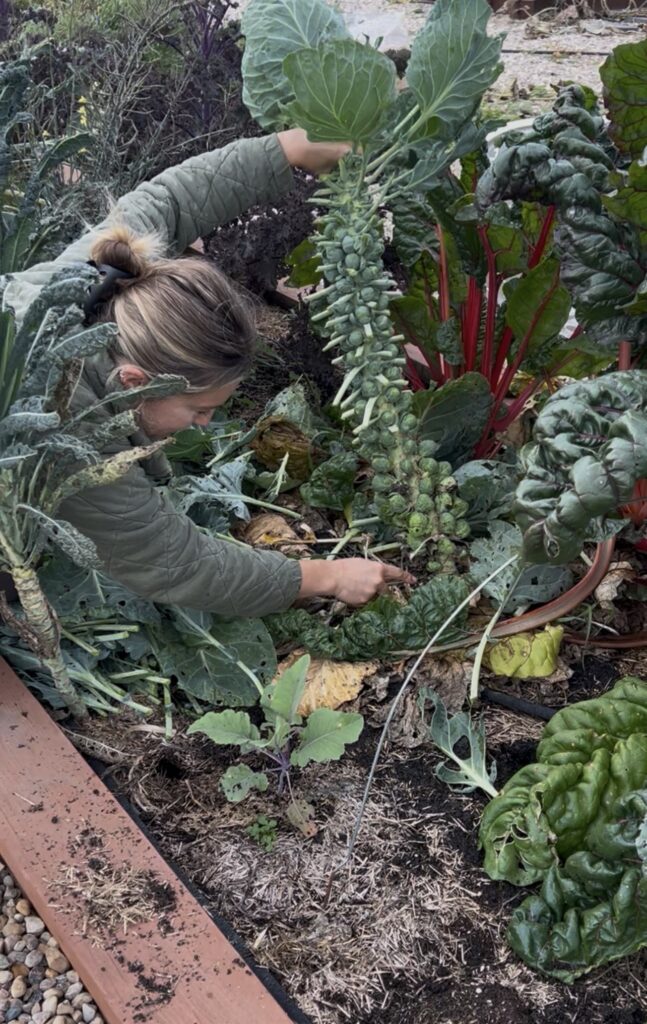
Harvesting brassicas is easy! Though it does vary slightly from one variety to the next…
- Harvesting Kale + Collards — use kitchen scissors or a knife to cut at the stem
- Harvesting Cabbage — push the cabbage slightly to the side then use a hori hori knife or serrated knife to cut at the root directly above the soil
- Harvesting Cauliflower/Broccoli — use a hori hori knife or serrated knife to remove the outer leaves then cut the stalk 3-4″ below the crown
- Harvesting Brussels Sprouts — use a hori hori knife or serrated knife to cut at the root directly above the soil then remove the brussels sprouts individually by hand
And there you have it!
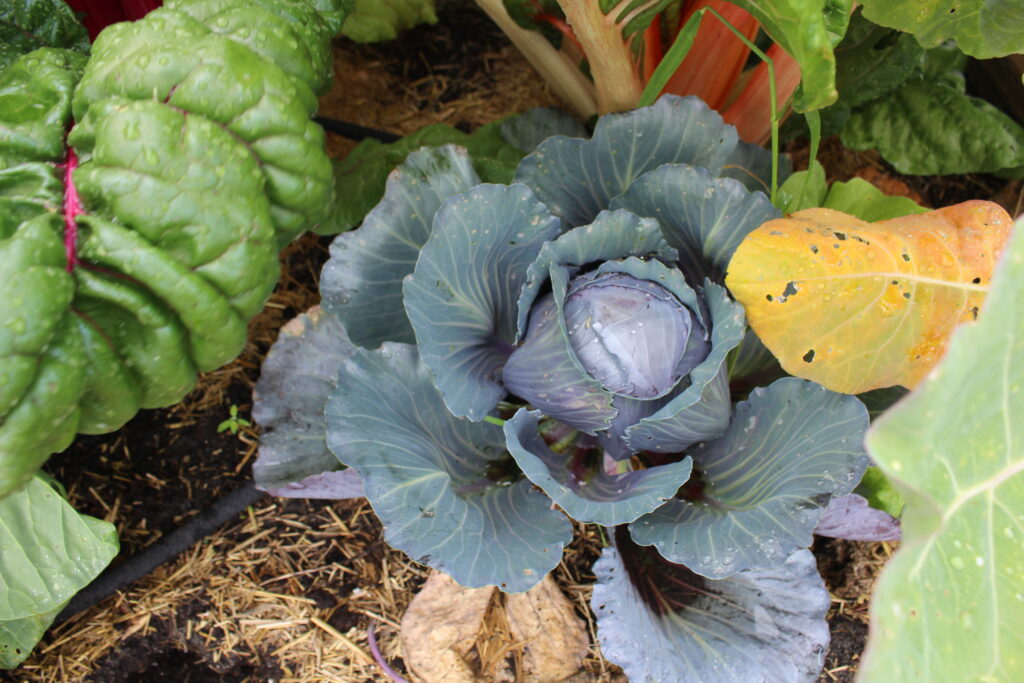
That’s my complete guide to growing brassicas in Zone 3, 4 and 5. I hope you found it useful!
To see more of our greenhouse & garden, follow me on Instagram @fromsoiltosoul. You can also browse my other blog posts for more organic gardening advice.
More Cold Climate “How To Grow” Guides:
- How To Grow Sweet Peas
- How To Grow Great Hot Peppers In A Short Growing Season
- How To Grow Oyster Mushrooms At Home In 5 Easy Steps
- How To Grow Microgreens At Home In 5 Easy Steps
- How To Grow Onions — Harvesting, Curing and Storing Over Winter
- How To Grow Ginger And Turmeric in Canada
- How To Grow Artichokes In A Short Growing Season (Complete Guide For Zone 3-5)
- How To Grow Eggplants In Zone 3-5 (A Complete Guide For Short Growing Seasons)