
How To Grow Eggplants In Zone 3-5 (A Complete Guide For Short Growing Seasons)
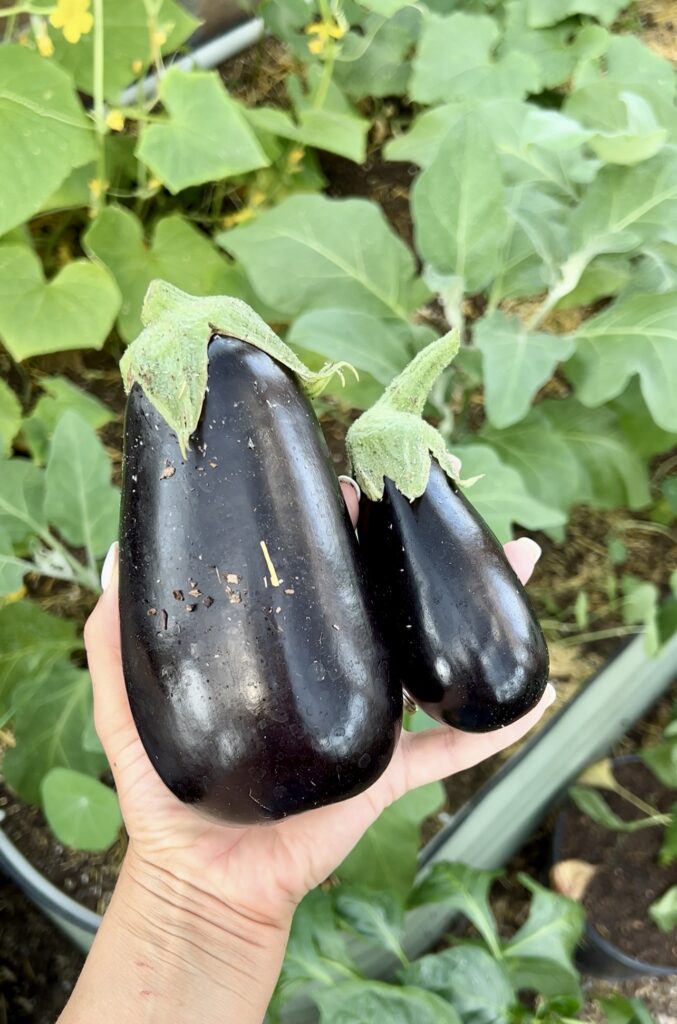
Eggplants are a heat-loving annual vegetable. But despite their love for sunshine and hot weather, you can still grow them successfully in a short growing season like we have here in Zone 3. Of course, there’s a few key tips and tricks to follow to ensure you grow big, healthy eggplants in Zone 3-5. So consider this your complete guide to growing eggplant. Hope you enjoy! Any comments or questions be sure to leave them at the end of the blog!
Eggplant Quick Growing Notes:
Vegetable: Eggplant

Latin name: Solanum melongena

Difficulty level: Moderate

Life cycle: Annual

Sun exposure: Full-sun

Days to maturity: 65-90 days

Timing: Start indoors between mid-February to mid-March depending on your Zone

Planting seed depth: Sow seeds 1/4" deep

Soil needs: Well draining soil that's been well-amended with compost and organic fertilizer
This post covers (click any link to be brought directly to that section):
- Can you grow eggplant in short growing seasons (Zone 3, 4 and 5)?
- What are the best eggplant varieties for Zone 3, 4 and 5?
- When to start eggplant seeds indoors in Zone 3, 4 and 5?
- When and how to transplant eggplant seedlings outdoors in Zone 3, 4 and 5?
- 3 top tips for extending the growing season for eggplant
- 3 top tips for caring for eggplant plants — soil, water & fertilizer
- How long does it take to grow eggplant in Zone 3, 4 and 5?
- Does eggplant grow well in a container/pot?
- How to harvest eggplant and simple cooking suggestions
Can you grow eggplant in short growing seasons (Zone 3, 4 and 5)?

The answer is YES. You can absolutely grow eggplant even in a short growing season like we have here in Zone 3.
Now, there are some tips and tricks I’ve discovered to help eggplant thrive in a northern garden. All of which I share in this blog!
But overall, eggplant should be treated like any other annual warm-season veggie in a Zone 3, 4 and 5 garden.
What are the best eggplant varieties for Zone 3, 4 and 5?
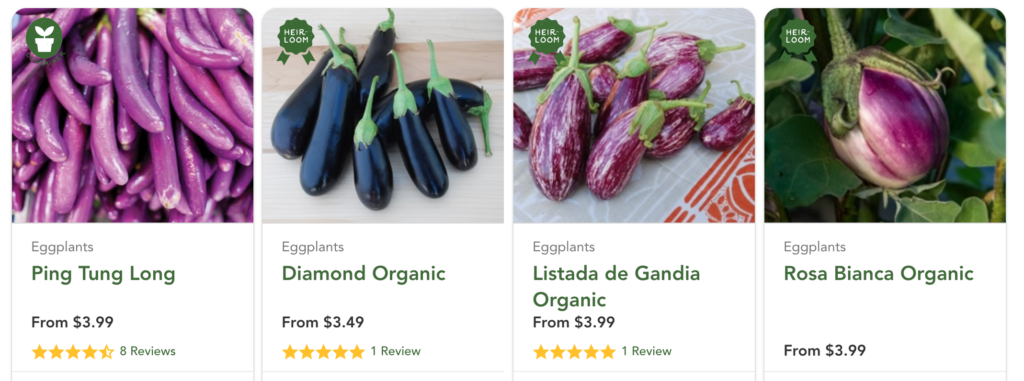
I love this question because there’s so many unique eggplant varieties out there. However, not all of them do well in Zone 3,4 and 5.
So what should you look for when choosing an eggplant variety for a short growing season?
- Days to maturity — choose an eggplant that will be ready to harvest within 85 days or less
- Smaller fruit — eggplant varieties that produces smaller sized fruit typically provide better yields in a short growing season
- Hybrid variety — find a hybrid eggplant that has been bred for short growing seasons
Now I’ve tried a lot of different eggplant varieties over the years, and have found these 3 varieties do the best in our Zone 3 garden
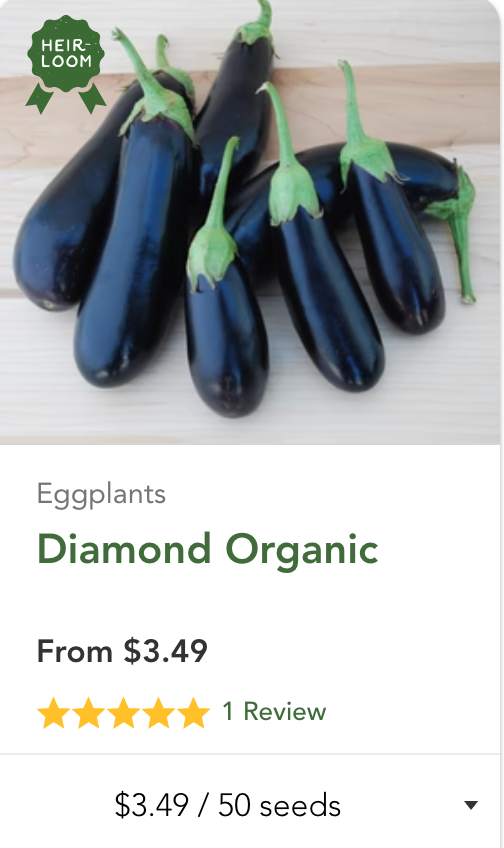
I’ve loved growing Diamond Eggplants both in our greenhouse in containers.
They have great germination rates! On average we get about 6-8 eggplant per plant.
Buy Diamond Eggplant seeds here from West Coast Seeds.
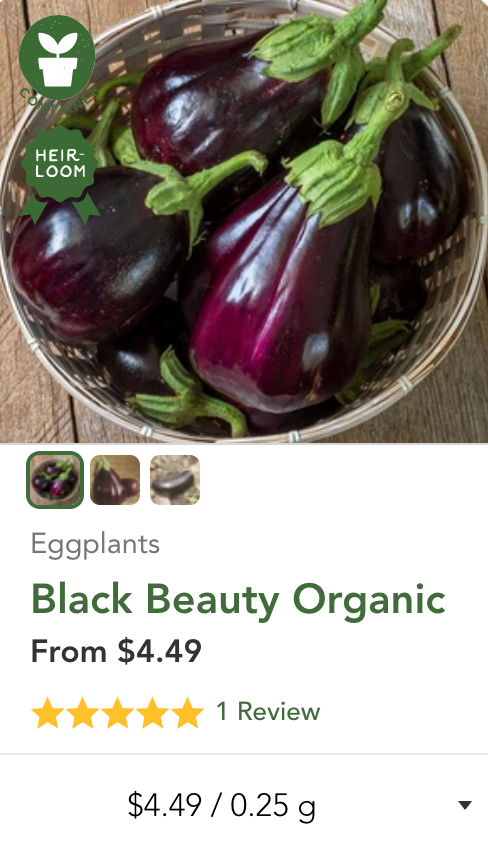
Black Beauty Eggplant produce lightly larger fruit and fewer eggplants per plant (about 3-5 on average).
However I really like cooking with them! They are beautiful to roast and have a nutty flavour. Highly recommend if you’re a foodie!
Buy Black Beauty seeds here from West Coast Seeds.
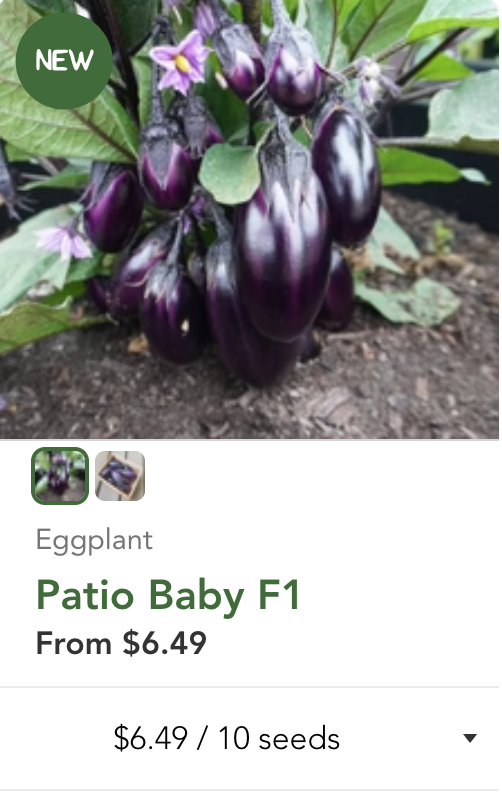
Patio Baby Eggplants are my favourite option for containers.
They produce tons of fruit per plant (we have about 10/plant on average!) and are disease resistant.
This is a great option if you’re an urban gardener and tight on space.
Buy Patio Baby Eggplant seeds here from West Coast Seeds.
When to start eggplant seeds indoors in Zone 3, 4 and 5?
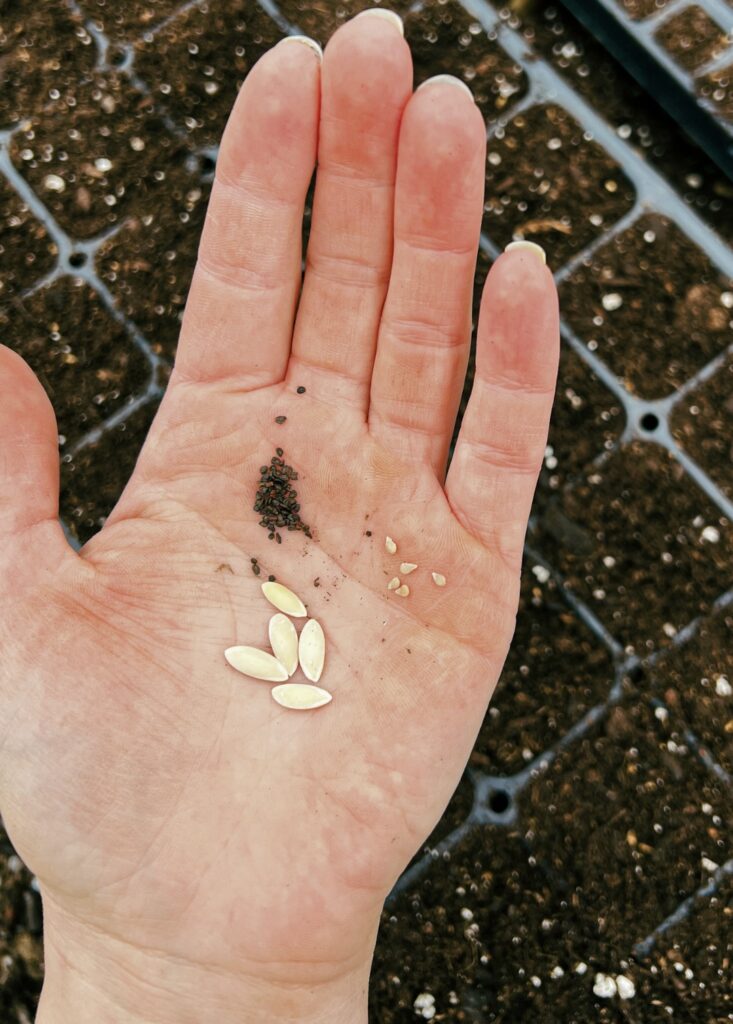
Timing is key for growing eggplants in a short growing season.
Because you want to ensure your plants have enough time to establish and set fruit before the Fall temperatures arrive.
Here in Zone 3, I typically start my eggplants around mid-Februrary to mid-March (depending on how organized I am!).
But what is the exact best time to start eggplant seeds indoors in Zone 3, 4 and 5?
A good rule of thumb is to start eggplant seeds indoors about 8-10 weeks before your average last Spring frost.
This will vary depending on where exactly you’re located. You can find your average frost dates by entering your zip/postal code on this FREE frost finder tool from The Farmer’s Almanac.
If you’re new to indoor seed starting, be sure to check out my other blogs on the topic here!
When and how to transplant eggplant seedlings outdoors in Zone 3, 4 and 5?
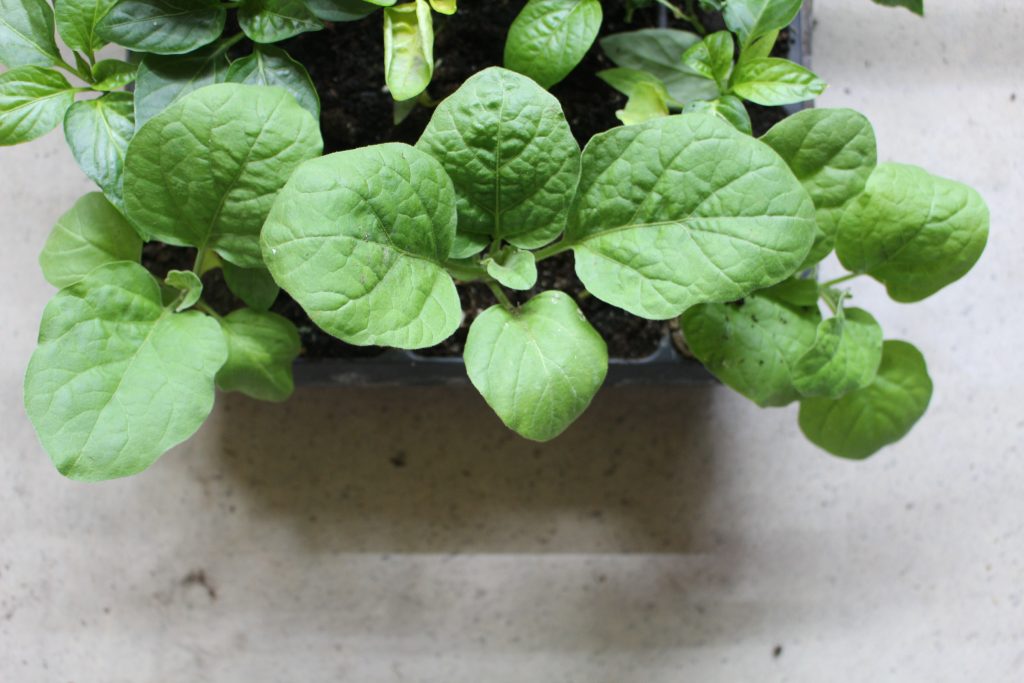
First, let’s chat when to transplant eggplant seedlings outdoors.
Now it’s key to remember eggplants are a heat-loving vegetable. They will not do well in cool temperatures.
So treat your eggplant seedlings the same way you’d treat your tomato, pepper, cucumber and other summer seedlings.
Transplanting eggplant seedlings outdoors is not complicated, but there are a few steps to follow.
So here’s 4 easy-to-follow steps for transplanting eggplant seedlings outdoors in Zone 3, 4 and 5.
- Gradually harden off your seedlings outdoors for a minimum of 10 days before transplanting
- Wait until the night time temps are hovering around 10°C consistently to transplant
- Transplant in early morning or late afternoon to avoid the heat of the day, which will stress out eggplant seedlings
- Transplant into nutrient-rich (compost amended) soil that is nice and damp
And that’s really all there is to transplanting eggplant seedlings outdoors successfully.
3 top tips for extending the growing season for eggplant
Like I’ve already mentioned in this post, eggplants are heat-loving crops.
Obviously, this can be a little tricky to provide in a short growing season. Here in Zone 3, we have a short cool Spring and sometimes an early Fall.
So finding ways to extend the growing season for eggplant is key!
Here’s 3 ways I do so.
1. Plant eggplants into containers
I’m a huge advocate for growing all eggplant varieties in containers if you garden in a short growing season.
I do this for two reasons.
The first is because a container helps stunt the plants growth so it can focus on producing fruit instead of foliage.
I do this with my hot peppers too (full growing guide here) and trust me it works so well!
The second reason to grow eggplants in containers is because you can move them to warmer areas of your yard or indoors as needed if temperatures change suddenly.
2. Move plants into a greenhouse or covered area or protect them if temps dip
As mentioned above, growing eggplant in a container makes this really easy. Just move the plants to a greenhouse or inside your home if temperatures dip.
But if you’ve planted your eggplants in the ground or a raised bed, you could cover them with a row cover or sheet. Either work well!
I usually find that we have a stretch of cold temps in mid August and then it gets warm again in September.
But inconsistent temperatures can result in eggplants not maturing. Eggplants need warm weather to grow!
So move or protect plants to extend their growing season.
3. Remove flowers by mid August to help plants focus on fruit production
Lastly, remove any flowers that haven’t yet developed into fruit by mid August.
This will help the existing fruit on the plant mature more quickly.
It’s an easy hack to get bigger, healthier eggplants! Even in a short growing season.
3 top tips for caring for eggplant plants — soil, water & fertilizer
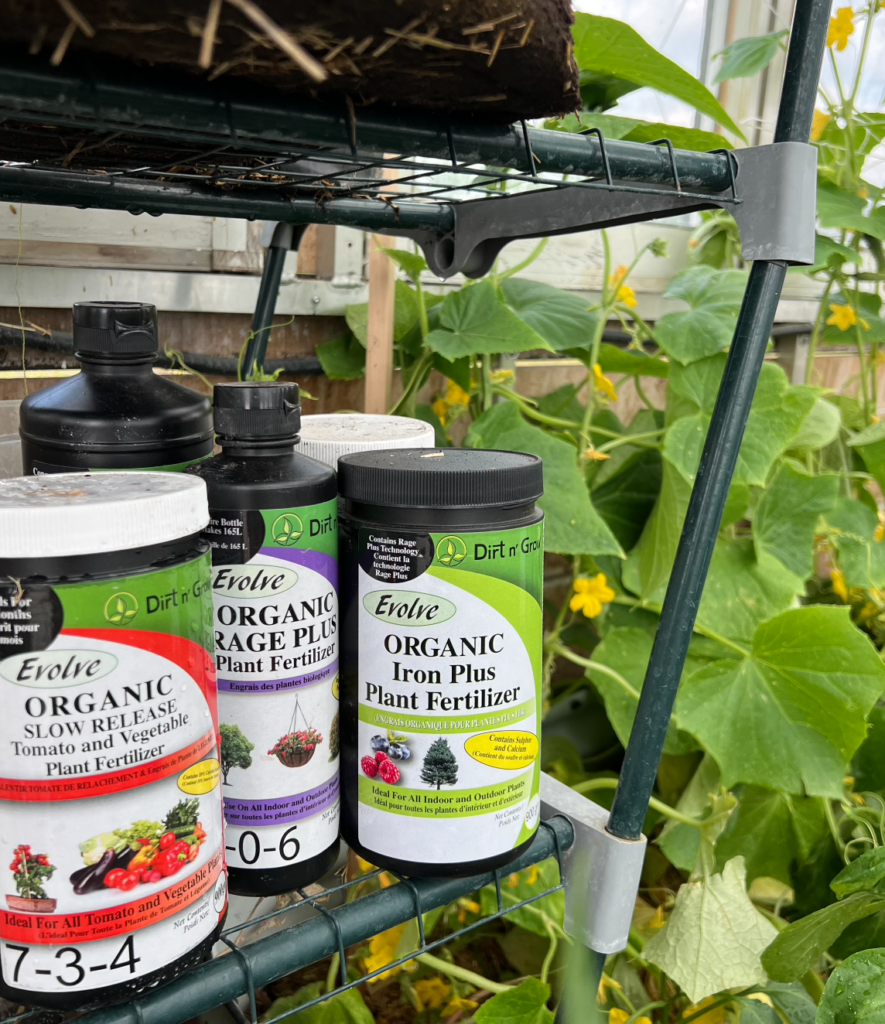
Let’s get into my 3 top tips for growing eggplants in a short growing season, including Zone 3, 4 and 5.
Tip 1: Amend your soil with compost and a slow-release organic fertilizer at the beginning of the growing season
Amend your soil before transplanting your eggplants (whether in ground/raised bed or a container).
I like to mix in by hand an organic bagged compost. Your local garden centre should have something in stock. Or if you make your own, even better!
Then add in a heavy-hand of organic slow release granular fertilizer. A slow-release granular fertilizer will slowly give your plants nutrients over several weeks.
We recommend the Evolve Organic brand (local to Manitoba and really effective!).
Tip 2: Water consistently, eggplants require adequate moisture in soil to produce fruit
Consistent watering is so important for eggplants to produce fruit.
We love this drip irrigation system and run it daily in the early mornings.
If watering by hand, be sure to get out there daily if there’s no rain in the forecast.
Tip 3: Mulch eggplants with straw or other organic material to maintain moist soil and reduce disease
Lastly, add mulch! If you’ve read my content before, you know I love mulching all my beds with straw mulch to retain moisture.
Mulched beds = less watering and disease!
Be sure to check out my other blogs on straw mulch — How To Use Garden Straw As Mulch For Vegetables and 10 Easy Tips For Using Straw Mulch In The Garden.
How long does it take to grow eggplant in Zone 3, 4 and 5?
The exact length of time it will take your eggplants to produce fruit depends on two things:
- The variety you’ve selected (ie: days to maturity it requires)
- The growing conditions your eggplant is living in
On average, I typically find our eggplants produce fruit by mid to late July here in my Zone 3 garden.
It’s probably safe to say that in Zone 3, 4 and 5 it will take a minimum of 65 days and maximum of 100 days to grow eggplant from seeds.
Does eggplant grow well in a container/pot?
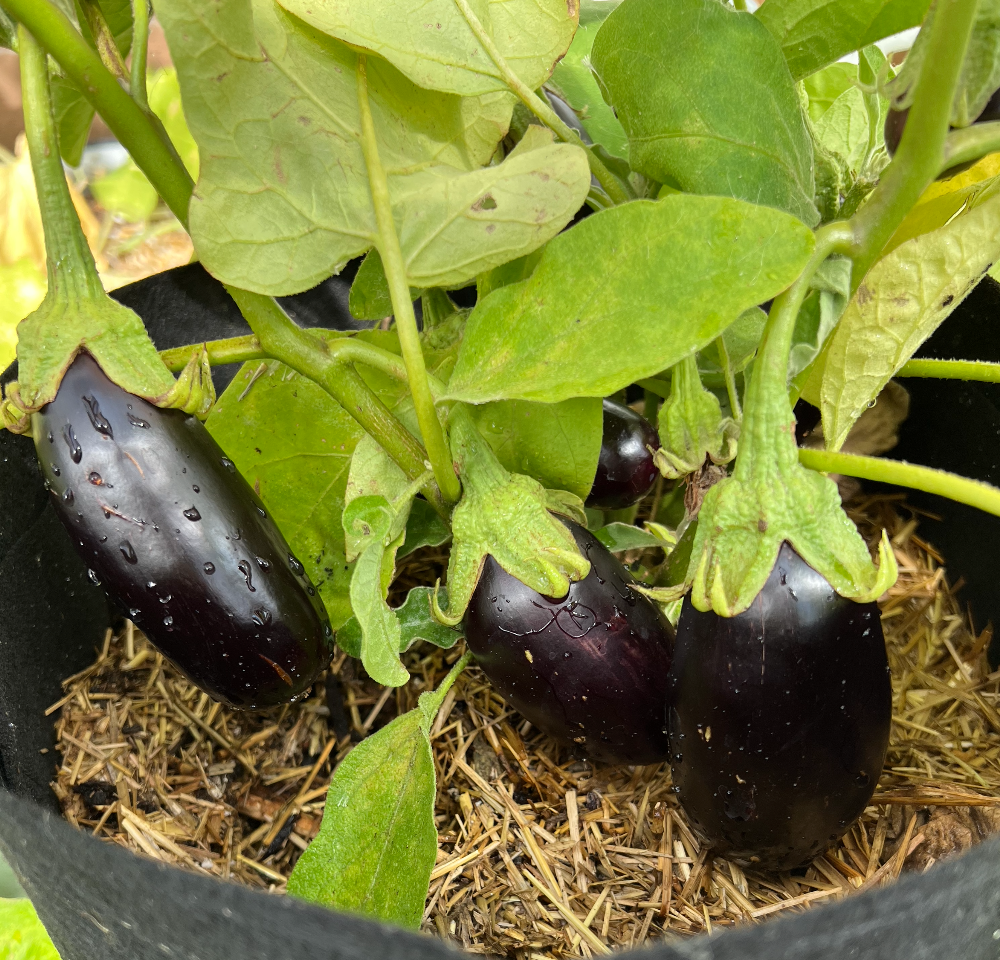
If you take one thing away from this complete guide to growing eggplant in a short growing season let it be this….
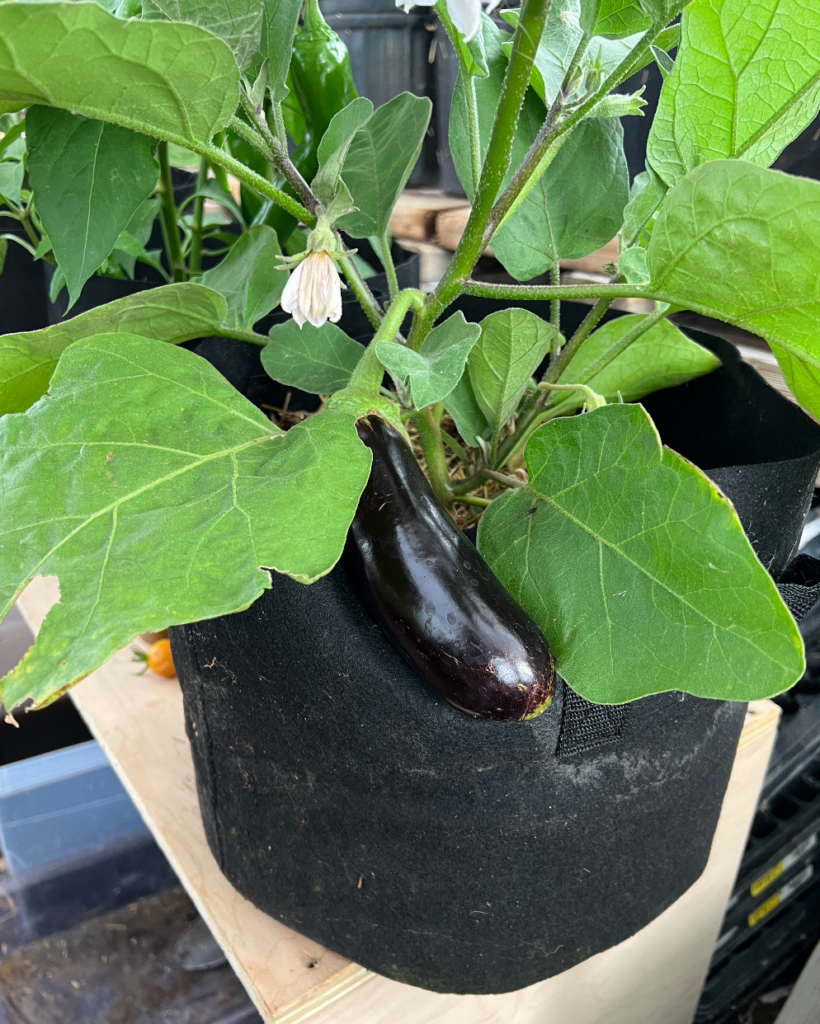
Eggplants grow best in containers in short growing seasons and will produce more fruit!
I’ve tested it for the last few years and the results are drastic.
The above photo is a Diamond Eggplant with tons of fruit on it grown in a fabric grow bag.
Now, here’s the same variety of eggplant toward the end of the growing season but grown in ground.
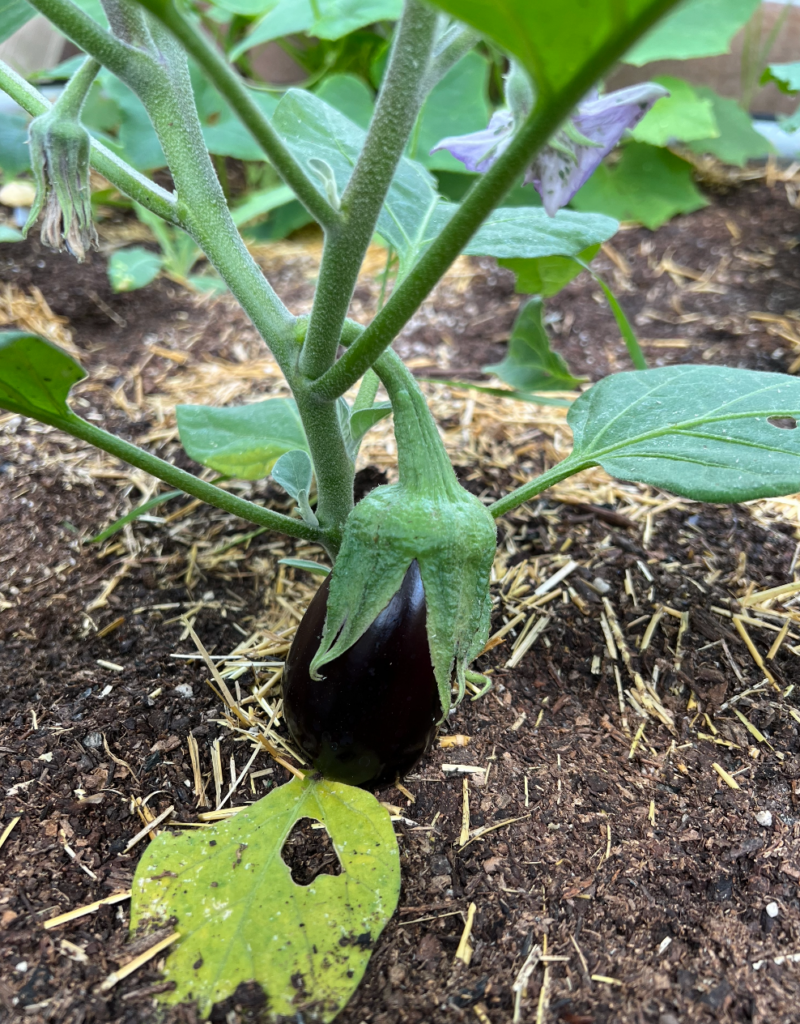
The reason it’s best to grow eggplants in containers/pots is because the confined space will stunt your plants’ foliage growth. Instead it can focus on producing more flowers and then fruit!
We personally love using these 5 gallon fabric grow bags to grow our eggplants in.
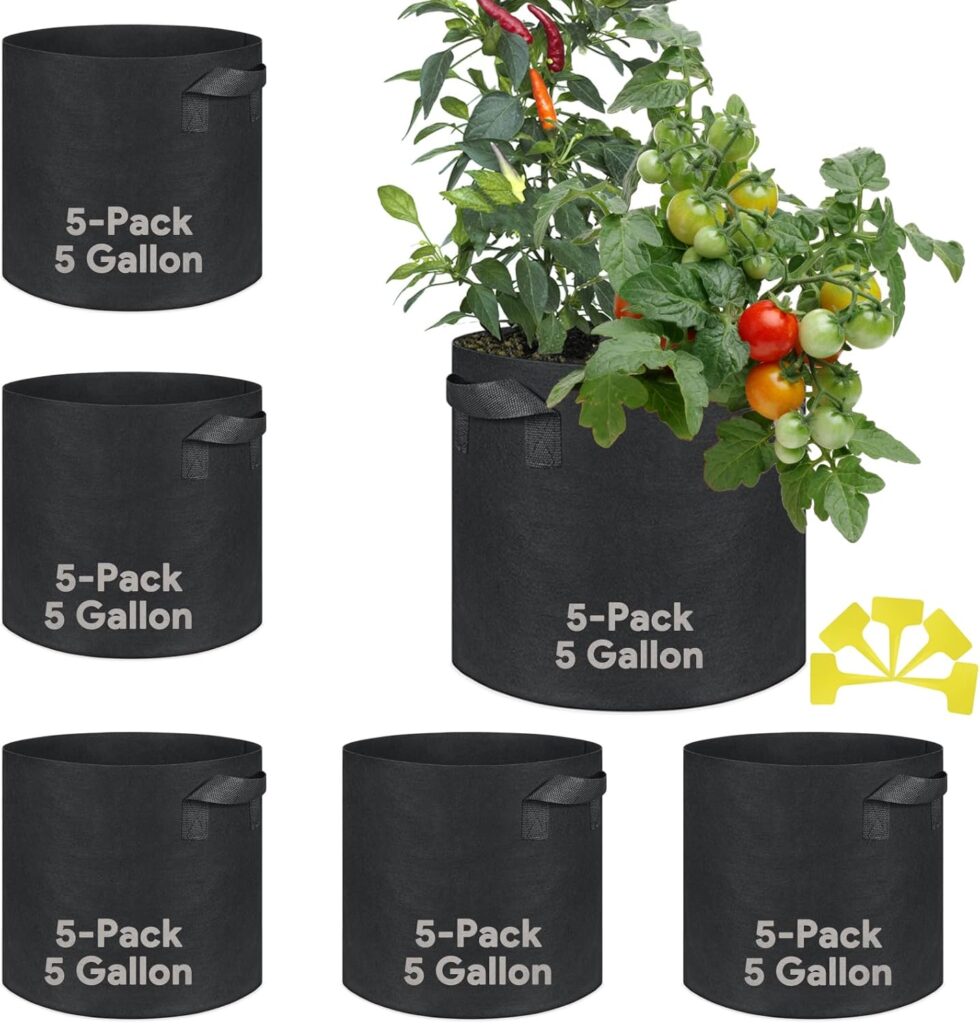
Fabric grow bags are great for numerous reasons!
- They let your plant’s roots breath
- Excess water can easily escape
- They’re easy to store in the off season
So in summary, yes eggplants grow great in containers especially if you’re in Zone 3, 4 or 5 and have a short growing season.
How to harvest eggplant and simple cooking suggestions
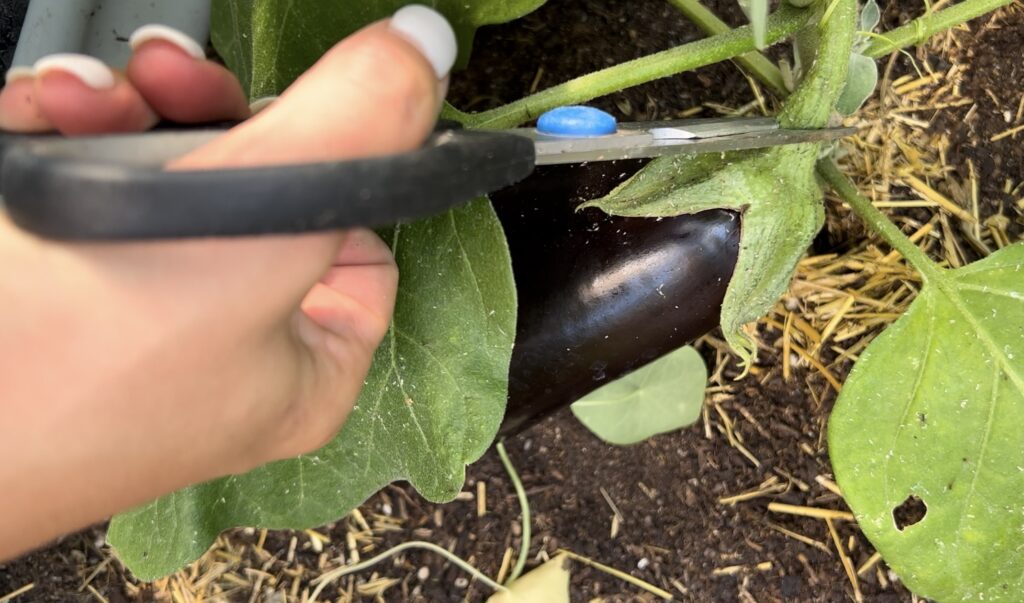
When it comes to harvesting your eggplant, it’s very simple.
To best harvest eggplant, just use a clean pair of kitchen scissors cutting the stem just above the fruit.
Avoid ripping off the fruit with your hands as it could lead to disease.
Now with cooking garden eggplant, there’s so many fantastic recipes on the internet!
Our fav ways to cook freshly harvested eggplant are:
- Sliced and grilled on the BBQ with oil and vinegar
- Made into a baba ganoush dip
- Roasted in pasta or as eggplant parmesan
And there you have it!
That’s my complete guide to growing eggplant in Zone 3, 4 and 5. I hope you found it useful!
To see more of our greenhouse & garden, follow me on Instagram @fromsoiltosoul. You can also browse my other blog posts for more organic gardening advice.
More Cold Climate “How To Grow” Guides:
- How To Grow Sweet Peas
- How To Grow Great Hot Peppers In A Short Growing Season
- How To Grow Oyster Mushrooms At Home In 5 Easy Steps
- How To Grow Microgreens At Home In 5 Easy Steps
- How To Grow Onions — Harvesting, Curing and Storing Over Winter
- How To Grow Ginger And Turmeric in Canada
- How To Grow Artichokes In A Short Growing Season (Complete Guide For Zone 3-5)