
3 Easy Ways To Organically Fertilize Your Veggie Garden In The Summer
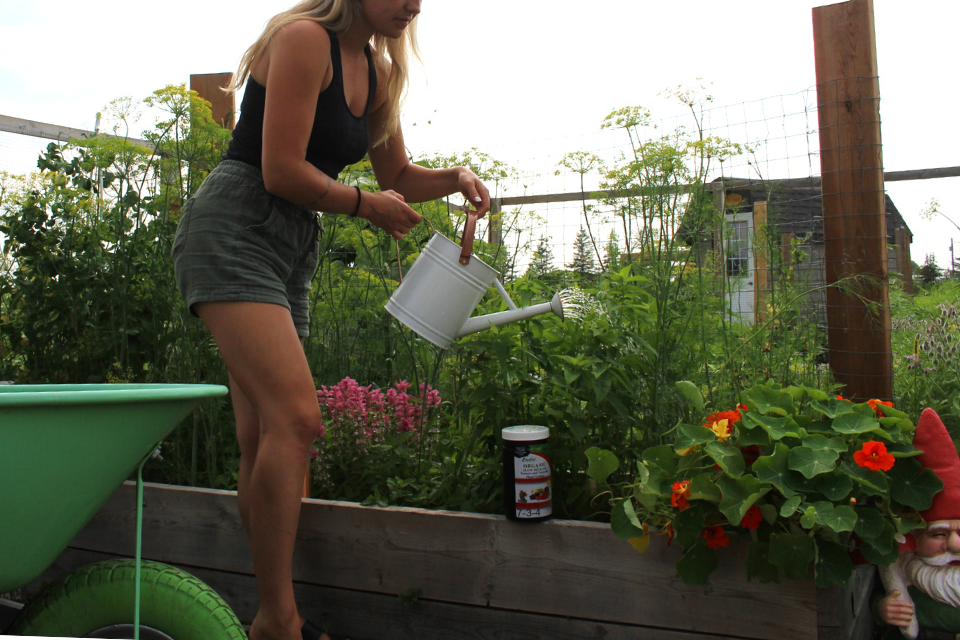
When I first started organic gardening, I had this idea that “organic” meant no fertilizing. I now know that couldn’t be further from the truth! And there’s SO many incredible organic fertilizers on the market, including my fav local Canadian fertilizers from Evolve Organic Fertilizers. I’ll tell you more about them in this blog post! But the truth is, you can completely transform your garden and improve your harvest by organic fertilizing. So here’s 3 easy ways to organically fertilize your veggie garden in the summer.
This post covers:
- Why You Need To Fertilize An Organic Garden
- What’s The Best Type of Organic Fertilizer For Veggie Gardens
- When’s The Best Time To Fertilize Your Garden
- How Often Should You Fertilize Your Garden
- 3 Easy Ways To Organically Fertilize Your Veggie Garden In The Summer
- How To Top Dress Your Plants With Compost
- How To Apply An Organic Liquid Fertilizer
- How To Apply A Slow Release Granular Fertilizer
Why You Need To Fertilize An Organic Garden
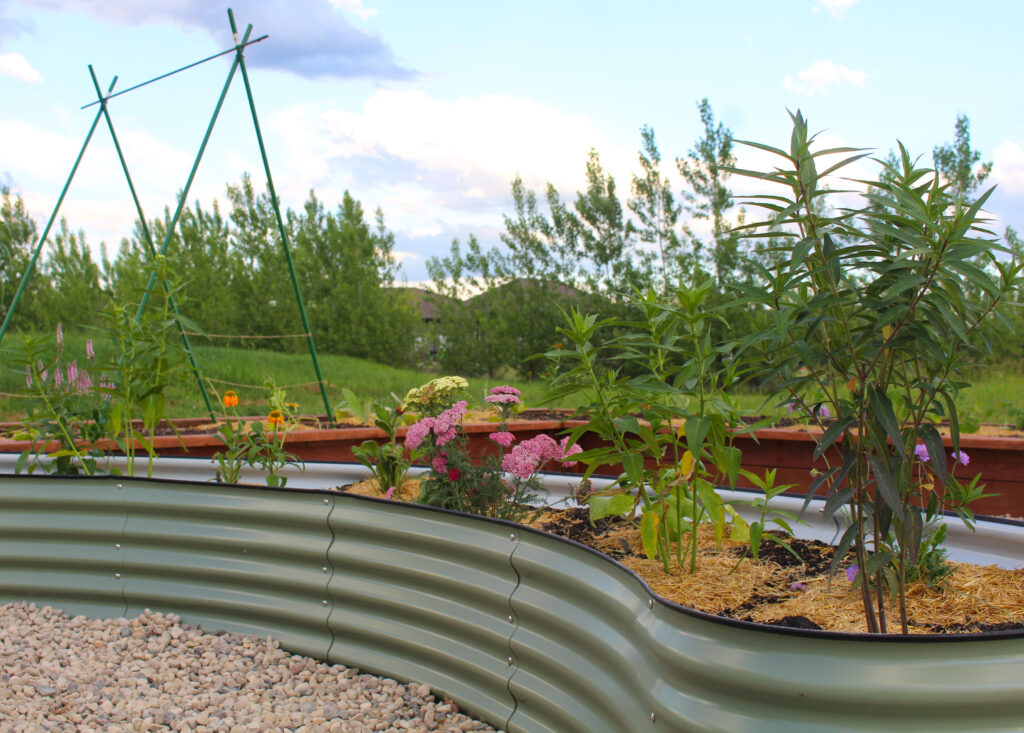
To put things simply, you NEED to fertilize an organic garden because the soil alone will not have enough nutrients to feed your plants throughout the entire season.
During hot seasons, the sun will deplete some of the nutrients from the soil. While during rainy seasons, the rain will wash away that nutrients.
So either way, your plants need additional support to help produce fruit and maximize your harvest.
Here’s some of the other reasons why you should organically fertilize your veggie garden:
- Helps build and improve your soil structure
- Stimulates the microorganisms in your soil
- Maintains your garden vigor & growth
All this to say, fertilizing your organic veggie garden doesn’t have to be complicated.
As long as you commit to feeding your plants a few times throughout the season, you’ll reap the benefits!
What’s The Best Type of Organic Fertilizer For Veggie Gardens
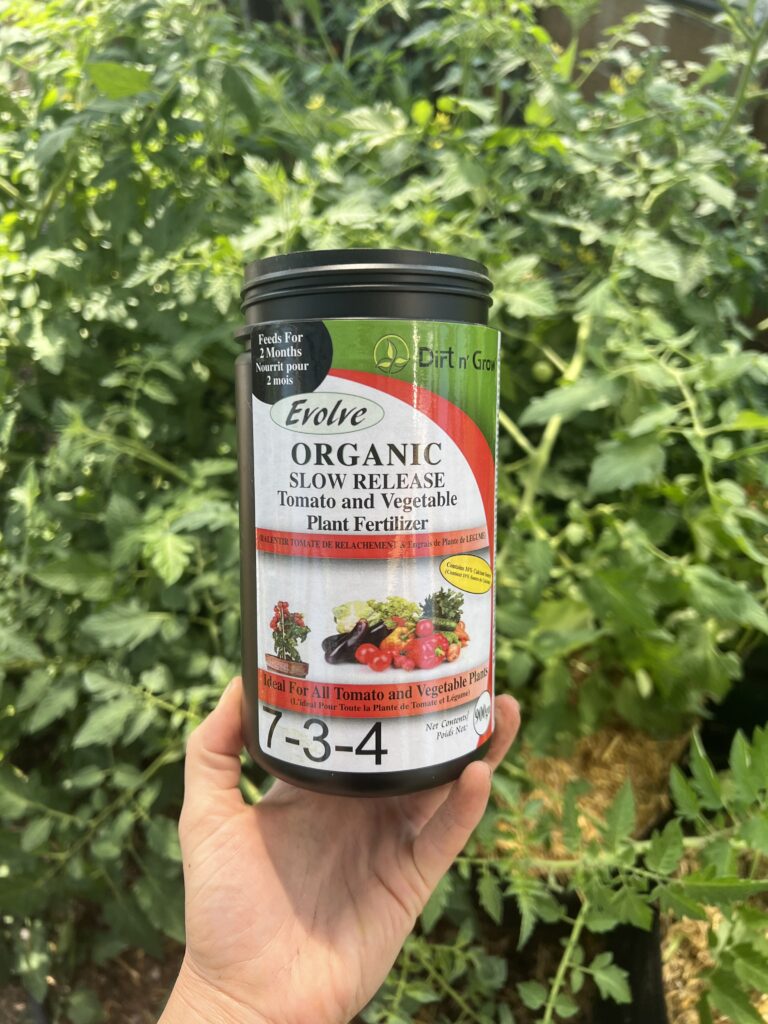
Canada brand Evolve Organic Fertilizers.
The best type of organic fertilizer for your vegetable garden depends on…
- Your plants’ needs
- Your soil structure
- The type of plants you’re growing
- What stage of the growing season you’re in
With that being said, I can make a few recommendations for what I’ve found are the best type of organic fertilizers for various growing needs.
What’s The Best Organic Canadian Fertilizer Brand?
I’m thrilled to shout-out my friends at Evolve Organic Fertilizers. They are the official sponsor of this blog post.
I’ve had the privilege of using their products for years as well as working with them as a brand ambassador. And can truly say I love, love, love their fertilizer. Because it actually works!
Evolve is a Canadian-made product local to Manitoba, so it is extra close to my heart.
The owner & creator of Evolve Organic Fertilizes, Sheldon has a Bachelor’s Degree in Agriculture. After 30 years gaining experience in the commercial agriculture industry, he decided to try his own and bring eco-friendly gardening to Canadian gardeners.
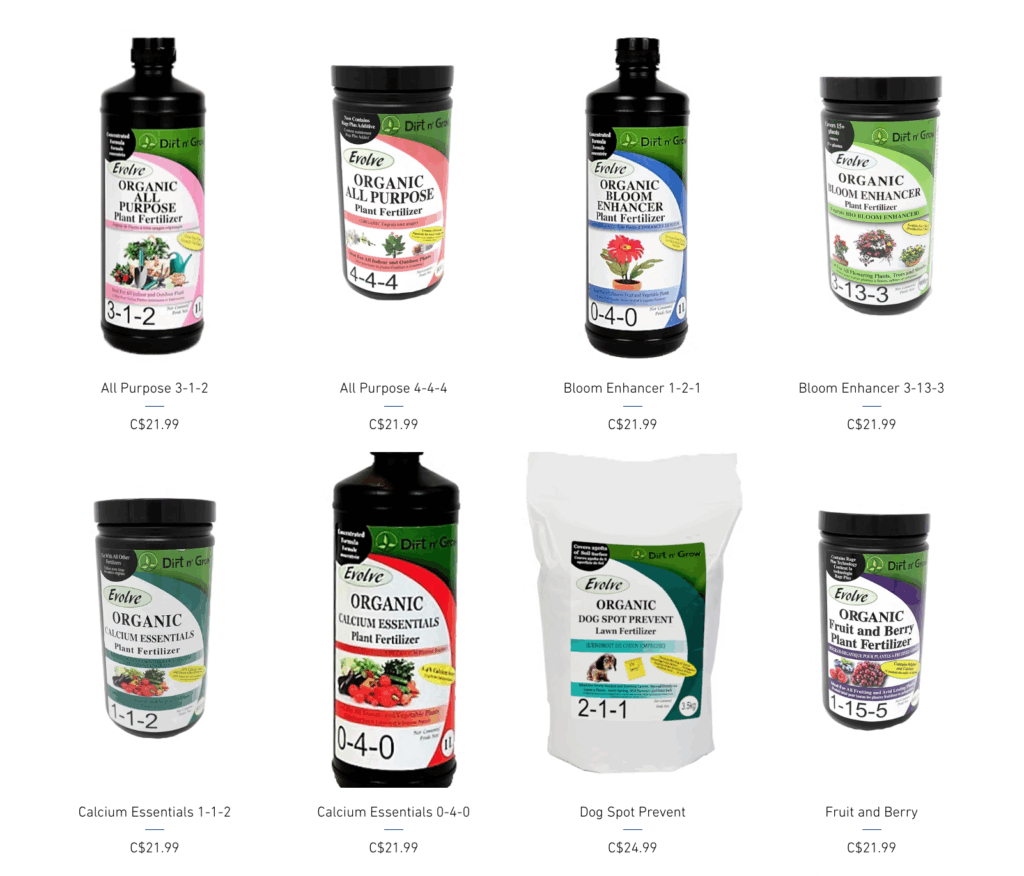
Evolve products can be found at garden centres across Canada, find their full list of retailers here (subject to change, check with your local garden centre to confirm they do have it in stock).
What’s The Best Type Of Liquid Organic Fertilizer?
When choosing a liquid organic fertilizer, I suggest looking for one that is specific to your fertilizing needs.
For example, Evolve has a few great liquid organic fertilizers, including ones specific for bloom enhancing, adding calcium to plants or building healthier soil.
So the best type of liquid organic fertilizer will be based on the plants you’re planning to feed and their needs.
Alternatively, it’s always a safe bet to choose an all-purpose organic liquid fertilizer. This will likely have a balance of NPK (nitrogen, phosphorus & potassium).
What types of plants should you fertilize with a liquid organic fertilizer:
- Seedlings from when you first start them indoors until they are ready to be transplanted
- Annual & perennial vegetables
- Annual & perennial flowers
- Houseplants
What Are The Benefits Of A Liquid Organic Fertilizer?
There’s numerous benefits to using a liquid organic fertilizer in the veggie garden.
Here’s 3 key benefits of using a liquid organic fertilizer:
- Concentrated formula so it’s fast acting, I sometimes see a difference within days of using!
- Liquid solution means it can be more easily absorbed by your plants’ roots
- Easy to apply by mixing into a watering can and watering at the root of your plants
What’s The Best Type Of Granular Organic Fertilizer?

The best granular organic fertilizer I’ve found for my veggie garden is Evolve Organic Slow-Release Tomato & Vegetable Fertilizer.
Evolve is the best granular organic fertilizer because it is specially formulated with additional calcium to grow strong, dark green foliage.
This is a slow-release organic fertilizer, so it will continue to feed your plants for up to two months after you apply it.
This means less fertilizing but with the same benefits!
Being a granular fertilizer (coarse grains of fertilizer) it is easy to apply. Simply sprinkle a handful around the base of your plant and gently work it into the soil’s surface. Easy as that!
What types of plants should you fertilize with granular fertilizer:
- Newly transplanted seedlings
- Annual fruiting vegetables (tomatoes, peppers, cucumbers, etc..)
- Crops planted in the Fall (garlic, perennials, root vegetables, etc..)
- Annual & perennial flowers
- Shrubs & fruiting trees
What Are The Benefits Of A Granular Organic Fertilizer?
As mentioned above, the biggest benefit of using a granular organic fertilizer is that it is slow release.
This means it will gradually release nutrients to your plants over 2 months. So you don’t have to fertilize as often!
Another key benefit of using a granular organic fertilizer is that it’s easy to apply. All you need to do is sprinkle a teaspoon or so around the base of your plants.
I also mix granular fertilizer into my containers and hanging baskets before planting.
What’s The Best Type Of DIY Homemade Organic Fertilizer?
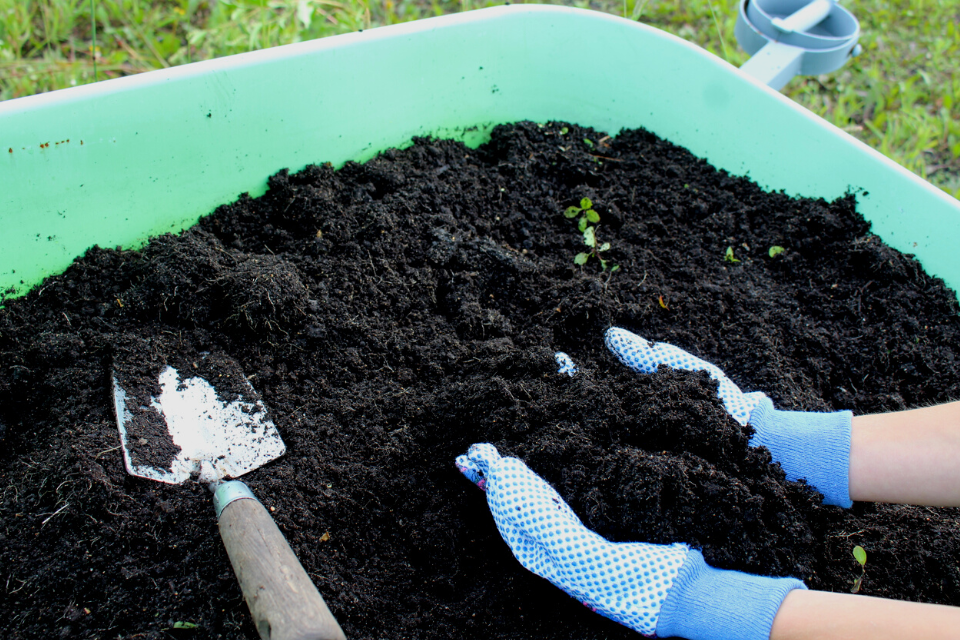
Anything homegrown is typically better, and the same goes for compost.
Compost is an incredible fertilizer for the garden and the best part, it’s FREE!
Compost doesn’t only provide additional nutrients to your plants, but it helps improve your soil structure and overall soil health. Compost is slow releasing, meaning nutrients are gradually dispersed into your plants’ roots over several days and weeks.
Using compost in the garden leads to stronger root development, better water retention in the soil and overall healthier plants.
What types of plants should you fertilize with compost:
- Annual & perennial vegetables
- Annual & perennial flowers
- Trees
- Shrubs
- Lawn & grass
When’s The Best Time To Organically Fertilize Your Veggie Garden

Start organically fertilizing your veggie garden after you transplant your seedlings in the early Spring.
Then, continue fertilizing up until the end of the gardening season for all annual vegetables, herbs and flowers.
The best time of day to fertilize your garden is either first thing in the morning or once the sun has gone down.
Avoid fertilizing in the heat of the day.
Your plants will have a harder time absorbing nutrients. The sun can also potentially cause organic fertilizer to burn plants, though this is typically more common with synthetic fertilizers.
Additionally, avoid fertilizing right before a big rain fall is expected. Rain can easily wash away fertilizer.
But all this to say, something is better than nothing! So whenever you can fertilize your garden is the right time.
How Often Should You Fertilize Your Veggie Garden
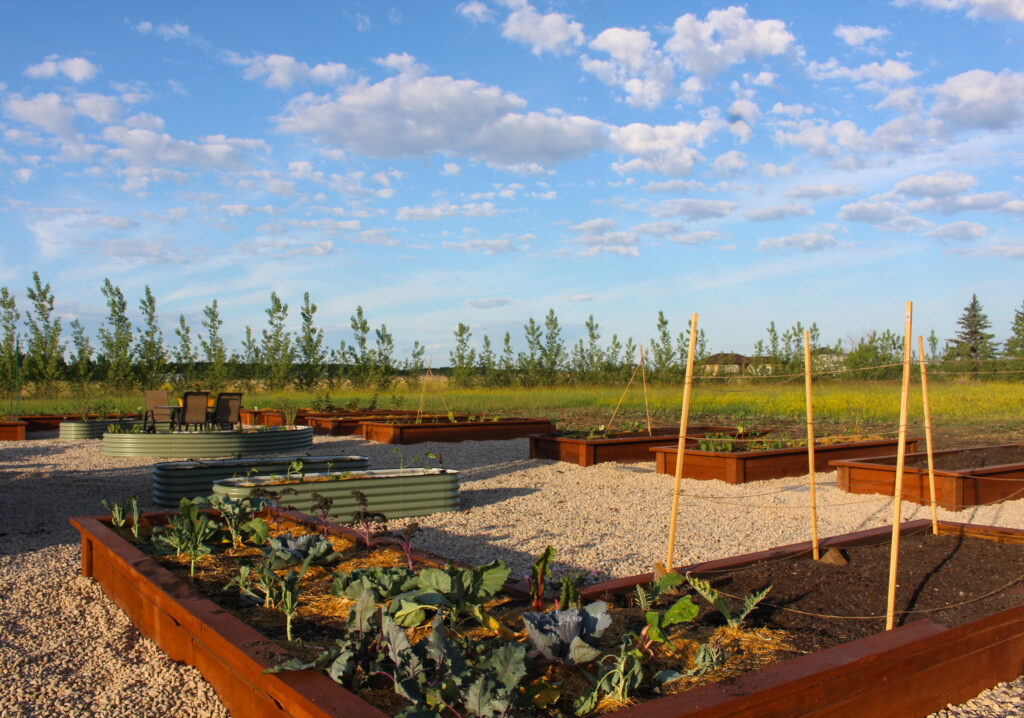
I personally believe you should continuously fertilize your veggie garden every few weeks from planting until the end of August.
This is the ideal organic fertilizing schedule.
Pro Tip: Add a fertilizing reminder to your calendar for the first Monday of every month from May until August.
With that being said, life gets busy! Especially during the gardening season, so I totally understand this might not be attainable.
As I mentioned above, something is better than nothing. So even if you only fertilize your plants once throughout the growing season, it’s better than none at all.
3 Easy Ways To Organically Fertilize Your Veggie Garden In The Summer
While there are many ways to organically fertilize your veggie garden, these are 3 of the easiest!
1. Top Dress Your Plants With Compost
You’ve already read above why compost is an incredible organic fertilizer for your plants. But it’s also very easy to apply! I suggest using the “top-dressing” method (explained further below).
2. Add A Liquid Fertilizer To Your Watering Can
This method is so easy because it allows you to cross off two gardening tasks at once — watering & fertilizing! Keep reading for the specifics on how much to apply.
3. Apply A Slow Release Organic Fertilizer
Finally, using a slow release fertilizer in your veggie garden is one of the easiest fertilizing methods because you won’t have to fertilize as often since nutrients are gradually released over several days/weeks. Less work, more reward! More details further down in this post.
How To Top Dress Your Plants With Compost
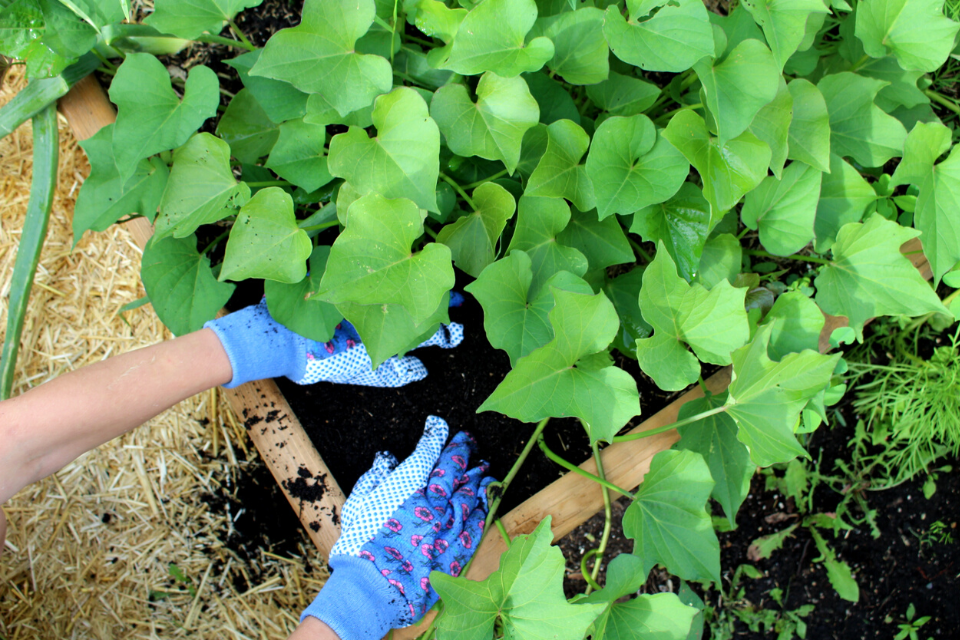
Top dressing your plants with compost is easy to do and really effective. If using your own homegrown, backyard compost be sure it is well mixed and broken down. It should be dark in colour and lightweight.
Top dressing means to add a fresh layer of compost directly on top of the soil.
To top dress your plants with compost, simply add 1-2 inches of compost around the base of your plant. You want to the compost to slowly release into your plants roots so place it a few inches from the stem. Surround the entire plant with compost.
And that’s it! That’s how you top dress plants with compost. With the help of the rain or your watering, the compost will slowly release nutrients into your soil as well as add organic matter.
How To Apply An Organic Liquid Fertilizer
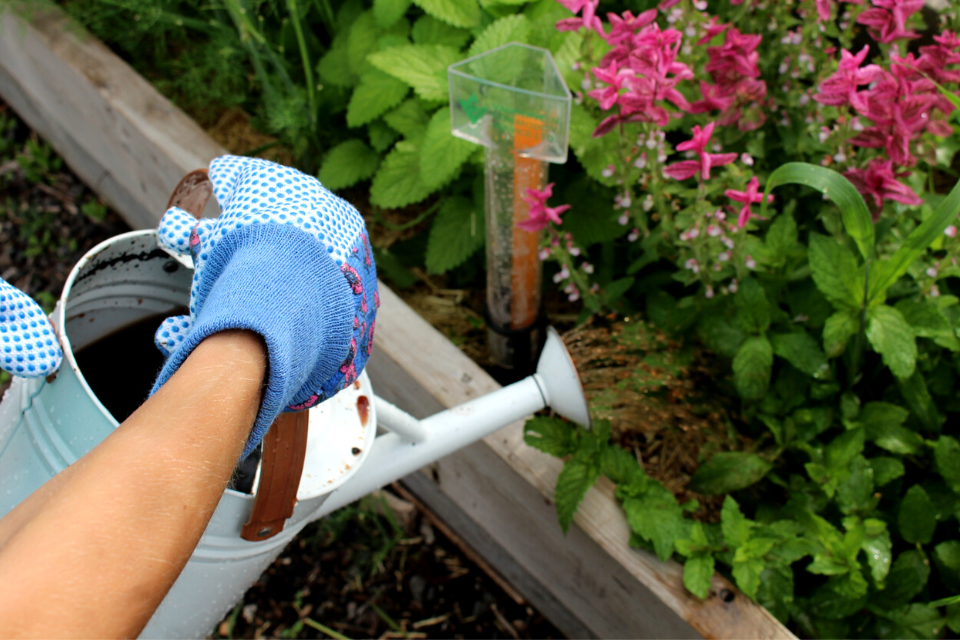
Applying an organic liquid fertilizer to your plants is easy and can be down while you’re watering your garden. Win-win!
Follow the directions on your liquid fertilizer to see how much it suggests you add to your watering can.
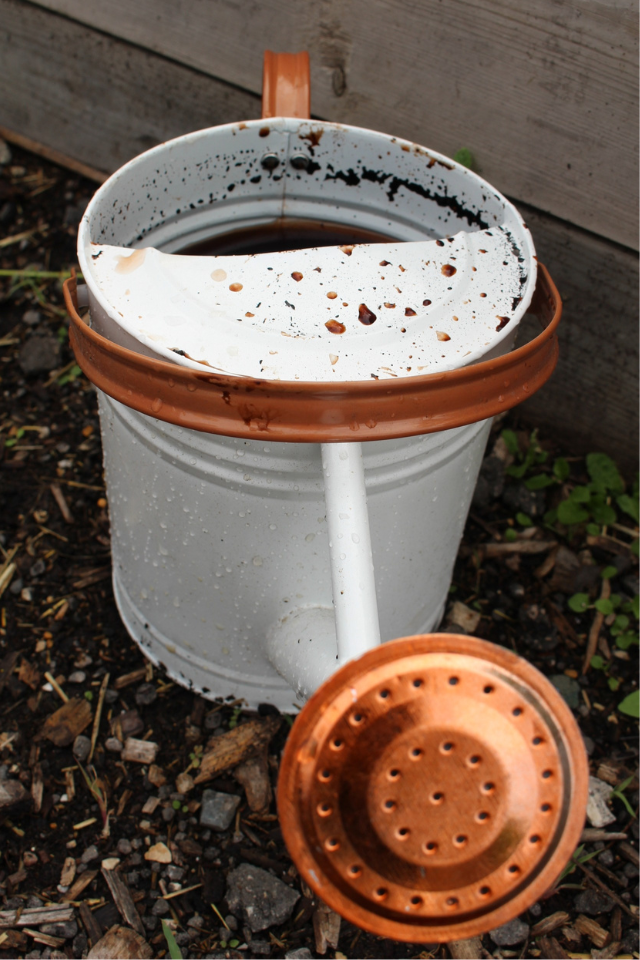
Chances are, you have a larger watering can for your outdoor garden like I do. If that’s the case, I typically add 1/2 cup of liquid fertilizer to my 10L watering can.
But because this is an organic product, you won’t harm your plants if you add more than specified. So don’t stress too much about the measurements!
Then, simply pour your water & fertilizer solution at the base of each plant, targeting the soil rather than the foliage. Be sure to water deeply.
How To Apply A Slow Release Granular Fertilizer
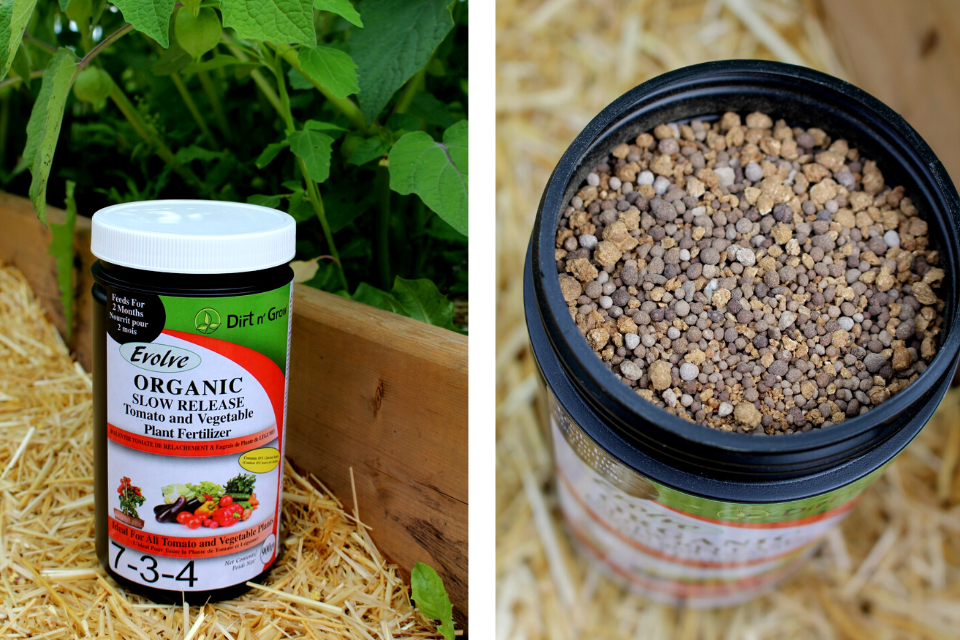
Applying a slow release granular fertilizer to your veggie garden is super easy.
However, it can be a bit time consuming as you have to apply it by hand to each plant.
The good news is that it’s slow releasing, meaning you won’t need to fertilize as often. So while it may take some time, it’s a task you’ll only have to do a few times throughout the gardening season.
To apply a slow release granular fertilizer — like the Evolve Organic that I love using and suggest — simply take a handful out of the bag and apply it around the base of your plant.
Pro-Tip: Generally the larger the plant, the more fertilizer it requires. So while seedlings may only need 1tsp, an established fruit tree may need an entire 900 gram container.
Be careful not to apply it too close to the stem but rather several inches away.
This is where your roots have developed under the soil. They’ll be able to absorb the nutrients more easily while also being encouraged to reach down further and grow stronger.
Can Different Types Of Organic Fertilizers Be Used Together?
The answer is YES! You can apply multiple different fertilizers to your plants and it will benefit them. In fact, for best results you should use a combination of these organic fertilizers in your vegetable garden.
First, apply compost to your veggie garden
This will work to build your soil’s health while also slowly releasing nutrients over several weeks/month.
Then mix in a granular multi-purpose fertilizer.
This will provide your plants additional NPK, which will help with root development as well as promote fruit growth.
Finally, water with a liquid organic fertilizer.
This will prevent disease and maintain healthy plant foliage throughout the entire season.
And there you have it!
You can know choose from these 3 easy ways to organically fertilize your veggie garden.
Remember, something is better than nothing. So even if you only have the chance to fertilize your plants once throughout the season, it will be beneficial for your garden.
You can follow @fromsoiltosoul on Instagram and Pinterest for more gardening content too.
Be sure to also follow @evolveorganicfertilizers for more fertilizer tips and advice!
Good information. Lucky me I found your blog by accident (stumbleupon).
I’ve saved it for later!
Hi
I have orange and fig trees. How many grams of potassium sulfate should I add to them and how many times a month?
Hey Tareg, I personally have not grown either but my overall suggestion would be to fertilize 2-3x throughout the growing season and then stop fertilizing all together over Winter so they can go into dormancy. This of course might vary slightly depending on your grow zone. Good luck!